
Guide
Best Squid Jig Australia 2026
The best squid jig for most Australian beginners is a size 3.0 egi; use 2.5 in shallow calm water and 3.5 when wind, current or depth make control harder.
Publisher disclosure: SquidFishing.com.au is the educational publishing site of RUI Fishing Tackles, edited by founder Rui Tang. RUI examples below link to our store, eging.com.au. They are condition-based starting points, not an independent brand ranking or a guarantee of more catches.
Start with a 3.0 for a general pier or bay. Choose the fall and colour for the water in front of you; use a standard 3.5 when wind, current or extra depth makes contact difficult, and a labelled slow-sinking variant when the jig keeps fouling shallow weed.
Conditions first: specific RUI starting options
| Your conditions | Model and variant | Why this option | Labelled fall |
|---|---|---|---|
| Clear daylight, sand and weed edges | GS05 Mullet Grey Silver — 3.0 | Natural mullet cloth over silver foil; no UV, glow or rattle | 15g; 3.2–3.5 sec/m |
| Shallow, calm water needing a smaller profile | GS05 — 2.5 | Same natural finish with a slower labelled fall than its 3.0 | 10g; 4.2–4.5 sec/m |
| Clear to lightly stained water with daylight remaining | AK10 Aurora UV Pink Silver Belly — 3.0 | Pink, silver flash and a UV-responsive finish for a change from natural baitfish | 15g; 3.2–3.5 sec/m |
| Night or reduced visibility | KR103 New Glow Banana — 3.0 | Chartreuse body with retained glow after charging; UV alone is not a light source in darkness | 15g; 3.2–3.5 sec/m |
| Shallow weed with a full-size profile | AK18 — 3.5 Slow Sinking | Longer fall time above weed; this is not the standard 3.5 variant | 19g; 5.0–5.5 sec/m |
| Clear water with more wind, current or depth | GS05 — standard 3.5 | More weight than its 3.0 while retaining the natural finish | 20g; 3.0–3.5 sec/m |
These are approximate manufacturer-labelled figures, checked against the current product pages on 17 September 2026. Higher sec/m means a slower fall; current, line angle and tension change the result. The links open the exact variant for current price and availability. Compare the existing sink-rate chart or use the colour selector if visibility is the main question.
If you want the complete method behind this choice, read the broader Eging Australia pillar guide first. This page focuses on the squid jig decision itself: size, colour, sink rate, water clarity, local structure and when it makes sense to move from a safe all-round jig into something more controlled.
If you already know the conditions you need to cover, shop the core RUI squid jig range (2.5-4.0) and use this guide to choose the size, colour and sink behaviour that fits the session. Selected 1.8 and 2.0 models extend the full RUI range for shallow, calm and finesse presentations.
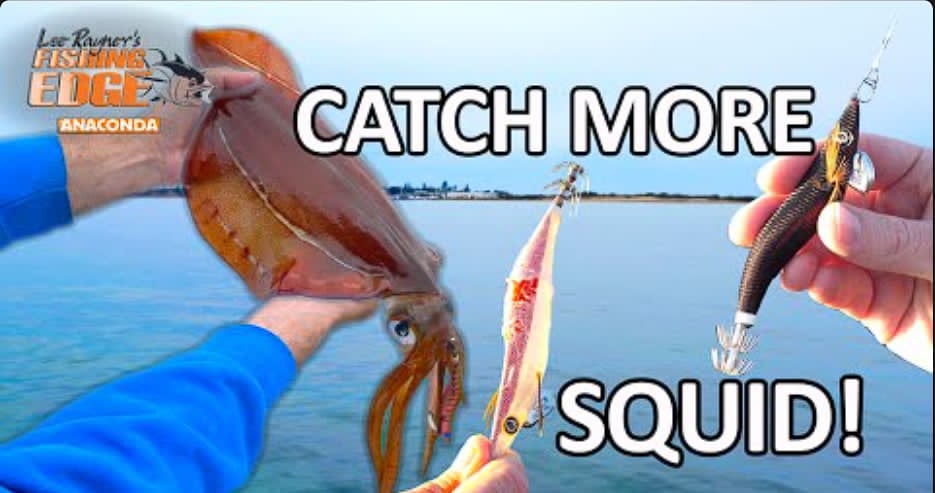
Why a 3.5 often becomes the experienced angler’s choice
Most beginners worry that a bigger jig will scare squid off. In a lot of Victorian water, that fear is overstated.
Better control in Melbourne wind and current
We fish plenty of sessions where breeze, chop and current ruin a light presentation before it really starts. A 3.5 usually holds its line better, stays more stable on the drop and lets you read what the jig is doing instead of guessing.
A stronger profile for quality squid
If you are trying to fish cleaner water, reef edges and deeper pier shadow lines for better Southern Calamari, a 3.5 gives you more presence. That does not mean small squid never eat it. It means the jig often looks substantial enough to draw a more committed response from quality fish.
More reliable in mixed Victorian structure
On public piers, broken reef and ribbon weed, a bigger jig often helps you keep better contact through the sink. That matters because a perfect colour choice means very little if the lure is still wobbling around out of control.
That said, none of this means the 3.0 is dead. A 3.0 is still one of the most useful sizes in Australian eging. The real point is that a lot of fishos stop treating 3.5 as a specialist option once they spend enough time in actual Victorian conditions.
What actually makes a squid jig work in Australian water
Whether you are throwing a 3.0, a 3.5 or something heavier for harder current, the jig still has to behave properly.
When a jig starts tumbling in the wind, or dropping flat instead of nose-first, or hanging dead on the pause, you already know the session is going sideways. A jig that casts clean, sinks true, darts with purpose and holds its angle on the drop is just easier to fish. Everything else follows from that.
Those four things matter more than flashy packaging because Australian squid anglers are often fishing real structure, not perfectly sheltered marina water. We are dealing with piers, weed beds, shallow reef edges, broken rock and changing tide lines.
When a premium finish or marketing claim is part of the price, use this testable checklist for judging fancy squid jigs before deciding whether it adds real performance.
To understand why smaller local ranges make different technical and commercial choices, look at how the owner’s fishing philosophy becomes the squid jig.
Why Australian-condition jig selection matters
This is one reason RUI squid jigs are getting serious attention around Port Phillip and Western Port. They make sense for fishos who actually deal with reef, tide and wind rather than just shopping by colour chart.
In practical use, the things that matter are:
- clean flight through wind
- stable sink posture
- sharp darting action
- good hang on the pause
- colour options that still make sense in clear water, dirty water and low light
If you are building or upgrading your kit, browse RUI squid jigs — official store — and if you are weighing up the labels, see how RUI compares with Yamashita, Shimano and Daiwa.
Forget the colour myths and keep it simple
Anglers love arguing about colour, but most of the time it still comes back to two things: water clarity and light.
Glass-clear water and bright sun
Go more natural. Browns, greens, sand tones and baitfish-style patterns are usually the safer call when the squid can inspect everything properly. A natural catalogue example is the RUI GS05 Mullet Grey Silver Natural Squid Jig, listed in sizes 2.5, 3.0, 3.5 and 4.0.
Dusk, dawn and overcast light
This is where glow, contrast and stronger pink or orange tones become more useful. When the light drops, you need the jig to stay easy to track. A catalogue glow example is the RUI KR56 Red Head Glow Squid Jig, listed in sizes 2.5, 3.0, 3.5 and 4.0.
Dirty water after rain or wind
If the water is stirred up, compare stronger contrast or charged glow against your natural jig. The RUI KR103 New Glow Banana provides chartreuse and retained glow. When daylight still penetrates lightly stained water, the RUI AK12 Aurora UV Orange Gold Belly is an orange-and-gold alternative; UV response is not a substitute for glow in darkness.
If you want the full breakdown, read our guide to squid jig colours in Australia. Once the colour is settled, the foil under the cloth — silver, gold, red or rainbow — decides how the jig reflects and reads underwater; the squid jig foil colours guide covers when to tie on each.
Real-world tactics for piers, weed beds and reef edges
Before heading out, check the Eging Tactical Radar. It is one of the quickest ways to decide whether the local wind and water shifts suit a lighter, slower presentation or whether you are better off fishing something that holds more authority. If you are keeping squid, also check the squid bag limit Australia guide before the session.
Piers
On piers, a 3.5 often comes into its own once surface chop and line belly start ruining a lighter jig. It punches through messy surface water and gets down to the fishable zone faster.
Weed beds
Weed beds are where quality squid often feel most comfortable. Let the jig sink into the gaps, give it a couple of sharp lifts, then leave it there. A bigger profile can help pull squid out of the weed when visibility or water movement is less than perfect.
Reef edges
Do not think of reef edges as somewhere to fish timidly all the time. An experienced angler uses the right jig to keep the lure just above the rock and hang it where a good calamari can intercept it.
The practical Victorian squid kit
If you want a clean, realistic starting spread for Melbourne and Victoria, this is a stronger way to think about it:
- one
3.0natural jig for calm, clearer or more cautious sessions - two
3.5jigs as the real workhorses, including one natural and one glow or stronger contrast option - one heavier or faster-sinking jig for deeper water, harder current or more exposed sessions
That is a far more practical system than carrying a wallet full of random small jigs and hoping one of them saves the day.
One catalogue example covering every size in that spread is the RUI GS04 Pilchard Blue Back Silver Belly Squid Jig, listed in sizes 2.5, 3.0, 3.5 and 4.0.
Best squid jig by water colour, time and depth
Use the water first, then light and depth. This prevents a common mistake: choosing a colour that looks good in the packet while ignoring whether the jig can be seen and controlled in the strike zone.
Use the Squid Jig Size Guide when depth and control are the main problem, the Squid Jig Colours Australia guide when visibility is the problem, and the Squid Jig Sinking Rate Guide when the lure will not hold the strike zone.
Which squid jig page should you use?
Use this page when the question is broad: what is the best squid jig in Australia, and how do size, colour and sink rate fit together? It is the educational selection and decision guide.
If you already know the size and only need colour help, go to Squid Jig Colours Australia. If you want a fast interactive recommendation before a session, use the Squid Jig Colour Selector. If the jig keeps touching bottom or drifting away, the next problem is probably squid jig sinking rate rather than colour.
If you are weighing up which brand to buy — Yamashita, Shimano, Daiwa, RUI and the rest — read squid jig brands in Australia compared. And if you are tempted by the cheapest jigs on the shelf, are Kmart squid jigs worth it? is the honest take before you spend. Once the gear is sorted, the squid fishing rod, reel and line setup guide ties the whole outfit together.
Practical takeaway
Most beginners start on a 3.0 and that is fine. But spend enough time on Victorian piers in a decent wind, or working current over a weed edge that keeps pulling the jig sideways, and you will probably end up reaching for a 3.5 more often than you expected.
Size is not the point. Control is. Once the jig behaves properly in the conditions you are fishing, the rest usually works itself out.
Sources and methodology
This guide is published by SquidFishing.com.au, written and reviewed by Rui Tang, and informed by his Victorian eging experience since 2008. It also uses approved Australian customer fishing reports and long-term RUI sales and customer feedback.
Sales data shows which sizes and colours anglers repeatedly choose; it does not prove that one jig will always catch more squid. The recommendations above are starting points that still need to be adjusted for depth, wind, current, structure and how the squid respond on the day.