
Guide
Blairgowrie Pier Squid Fishing
Blairgowrie Pier squid fishing guide: broken ground at dawn and dusk, sheltered marina edge in westerlies, pier lights at night, parking and jig tips.
Blairgowrie Pier Squid Fishing: Local Eging Guide
A practical Blairgowrie Pier squid fishing guide for the Mornington Peninsula: where to cast, when to go, and how to fish a busy marina the right way. Blairgowrie packs three different squid options into one location: open broken ground, sheltered marina edges, and a lit pier for night sessions. Knowing which one to fish on the day is the whole game.
For the wider area, start with Melbourne Squid Fishing and Port Phillip Bay Squid Fishing to see how Blairgowrie fits into the broader bay system.
June/winter update: Blairgowrie is a strong low-light option when the open broken ground stays clean. Use what size squid jig to use for the 3.0/3.5 call, choose clear or dirty water colours from Squid Jig Colours Australia, and check squid fishing regulations Australia before keeping a feed. Nearby, compare Rye Pier for easier water and Sorrento Pier for deeper tide windows.
Getting There and the Layout
Blairgowrie is on Point Nepean Rd, the B110, about 90 minutes from Melbourne via the M11 and the Peninsula. The pier runs out from the foreshore beside the marina, with a breakwall protecting a packed harbour of moored boats.
That breakwall is the key. It splits your fishing into an exposed open side and a protected marina side, and the wind decides which one you fish.
Parking at Blairgowrie
The easy option is the Marina Top Carpark, a sealed carpark signposted off Point Nepean Rd above the marina, with a bus stop on the main road if you are coming by public transport. It is a short walk down to the pier and breakwall.
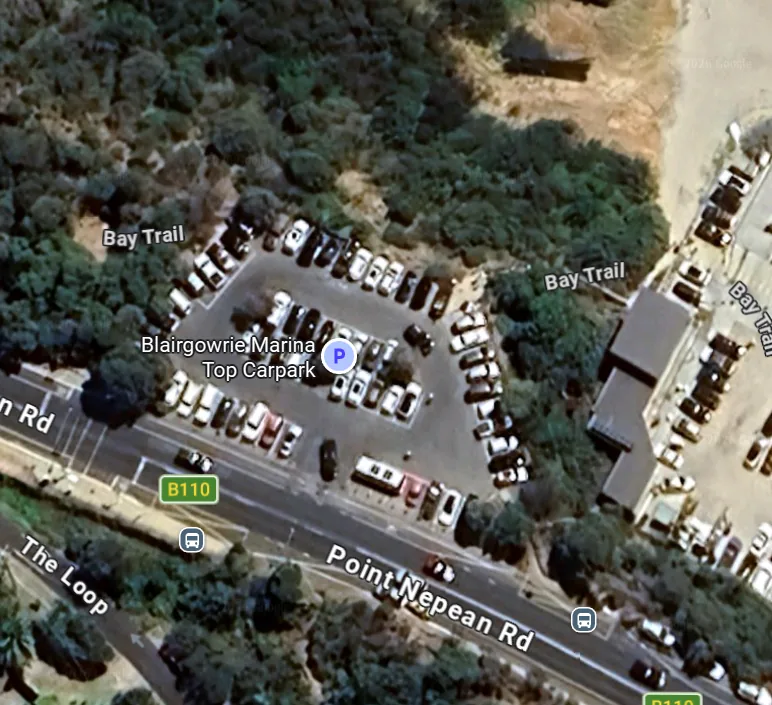
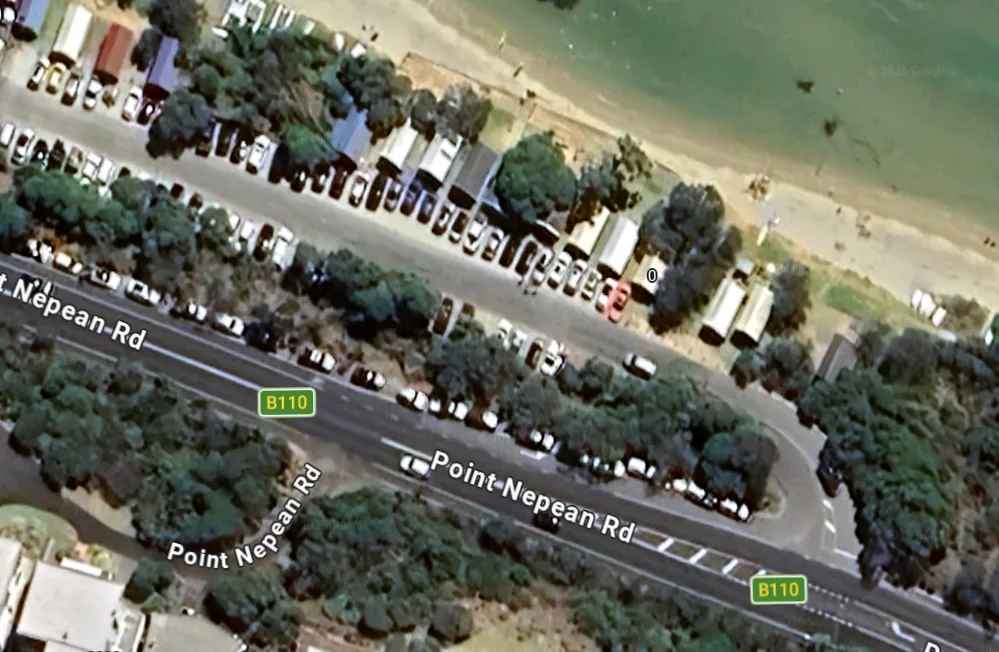
When it is full, and in summer it fills early, there is roadside and foreshore parking strung along Point Nepean Rd beside the beach. In peak season, the dawn and dusk sessions are not just the best fishing; they are also when you are more likely to find a park.
Wind Planning: A Westerly Opens Up the Marina Side
Blairgowrie’s big advantage is that it gives you a sheltered option. When the wind is blowing in from the west and the open ground turns choppy, tuck in behind the breakwall and fish the marina side. It stays calmer, and squid can sit happily in the protected water.
On still mornings and evenings, the open broken ground is the prime target. If it is blowing hard straight onto the open side, either move to the marina edge or wait for the wind to back off around last light.
Before you drive, check the Eging Tactical Radar and compare Blairgowrie with nearby Rye, Sorrento and other Mornington Peninsula options.
Where to Cast
The Broken Ground Off the Breakwall
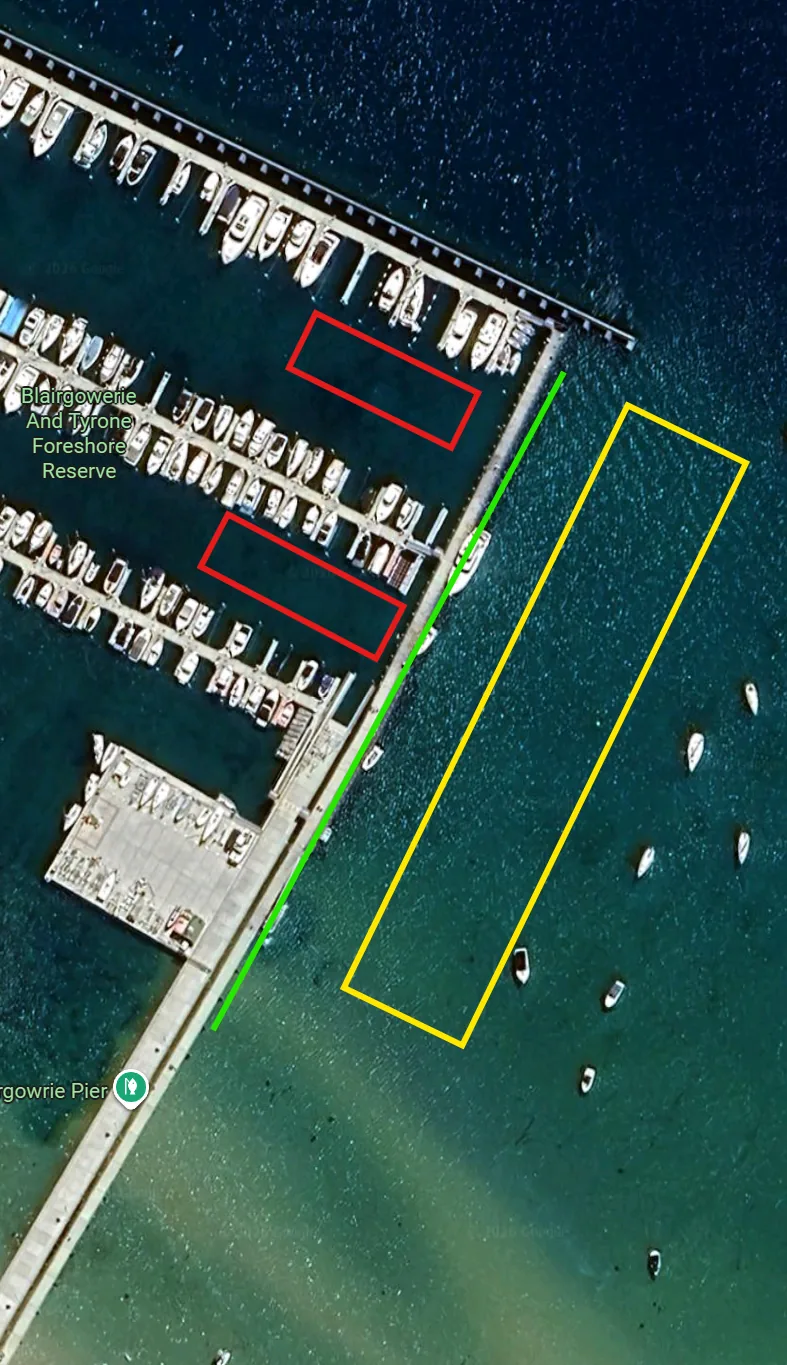
The open water just off the end of the breakwall sits over broken ground: a patchy mix of weed, sand and reef that squid love to hunt across. This is the zone that produces the better squid, and it is at its best in low light: early morning and the evening bite, when the water is usually calmer and squid move up to feed.
Fan your casts across the broken ground, let the jig sink to find the structure, then work it back with a lift-and-flutter retrieve. Because it is broken ground, you will occasionally find the bottom. That is normal here.
The Marina Edges
The lanes of water between the moored boats on the marina side hold plenty of squid, and they are a genuine option when a westerly has the open side blown out. This is also where local etiquette matters.
Night Fishing Under the Pier Lights
After dark, the lights along the pier pull in large numbers of smaller squid. It is a fun, productive session, especially for kids, beginners or anyone building confidence, but expect smaller models than the broken-ground fish.
Downsize your jig, cast into the edge of the light where it meets the dark water, and work it slowly. For the full approach, see the night squid fishing guide.
Squid Jig Size for Blairgowrie
- 3.0: the all-rounder for the broken ground in normal conditions
- 2.5: for the smaller squid under the pier lights and in shallow, calm water
- 3.5: when there is wind or run, or when you need to reach the deeper edge off the breakwall
More detail in the squid jig size guide and sinking rate guide.
Squid Jig Colours for Blairgowrie
Start with natural colours in clear water, move to pink as the light changes at dawn and dusk, and go to orange, red foil or glow in dirty water or under the pier lights at night.
These patterns are informed by RUI’s real-world data across close to a million squid jigs sold through online and wholesale channels, cumulative to July 2026. Full methodology and breakdown in the squid jig colours guide.
How to Fish Blairgowrie Cleanly
- Mind the boats. Keep every cast clear of the moored vessels on the marina side.
- Beat the broken-ground snags. The open ground grabs jigs, so the anti-snag jig mod is useful here.
- Share the pier. It is a busy walkway and a working marina. Do not block access, and watch your backcast.
- Count the sink. Blairgowrie is a good place to learn bottom contact because the current is usually quieter than harder-running lower-bay spots.
Blairgowrie Pier Squid Fishing FAQ
Where do you park at Blairgowrie for squid fishing?
Use the Marina Top Carpark signposted off Point Nepean Rd, with roadside and foreshore parking along Point Nepean Rd as overflow. In summer, arrive at dawn or dusk to make parking easier.
What is the best time for squid at Blairgowrie Pier?
Dawn and dusk on the broken ground off the breakwall produce the better squid. After dark, the pier lights often gather large numbers of smaller squid.
What wind is best for Blairgowrie Pier?
A westerly is very workable because the marina side stays sheltered behind the breakwall. Calm mornings and evenings are best for the open broken ground.
Can you fish around the marina boats at Blairgowrie?
Squid hold along the marina edges, but treat it as a restricted etiquette zone. Never cast over or onto the moored boats. Fish the breakwall edge and broken ground first, and the marina edge only with short, careful casts.
Related Guides
- Rye Pier squid fishing
- Sorrento Pier squid fishing
- Mornington Pier squid fishing
- Melbourne squid fishing
- Eging Australia: complete guide
Keep building the full Australian eging system: pick your next spot or dial in your gear with the guides above.