
Guide
Portarlington Pier Squid Fishing
Learn how to approach Portarlington Pier squid fishing from the breakwall with satellite-map weed reading, casting distance, size 3.5 squid jigs
Portarlington is the pier I point people to when the rest of the bay is blown out. It is not the most glamorous spot on the Bellarine, but it is one of the most reliable. The style is a world away from Point Lonsdale, Portsea or Queenscliff South Pier: instead of heavy current and deep water, Portarlington is about weed beds, calmer water, good light windows and controlled presentations.
The pier’s orientation gives it useful protection from southerly and south-westerly wind, which is what keeps it fishable when more exposed locations turn ugly.
New to eging? Start with the Eging Australia guide for the method, then read Melbourne Squid Fishing and Port Phillip Bay Squid Fishing for the wider area.
For nearby Bellarine options, compare this page with Clifton Springs Squid Fishing to the west, Indented Head Squid Fishing and St Leonards Pier Squid Fishing to the south, especially when wind direction decides which shoreline stays clean. For a wider Corio Bay plan, use the Geelong Squid Fishing guide.
June/winter update: Portarlington is worth checking when the weed beds stay clear after a front. Treat a size 3.5 as the main breakwall jig when casting distance and a bigger bait profile matter. Drop to 3.0 or 2.5 only when shallow water, summer squid or heavy weed force you down. Choose clear or dirty water colours from Squid Jig Colours Australia, and confirm squid fishing regulations Australia before keeping squid.
360° Field View: Portarlington Breakwater
This real 360° field photo shows the Portarlington breakwater, ferry-side water and available working space. Drag around the view to understand the casting room, harbour structure and vessel channel before planning a session.

Drag to look around. Use the mouse wheel, + and − keys, or the controls to zoom.
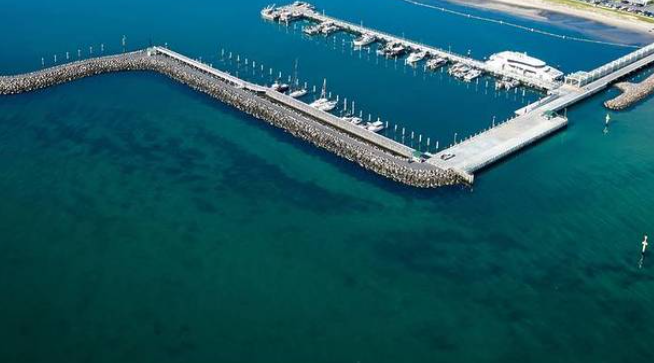
Weed Beds and Calm Water
The main feature at Portarlington is the broad seagrass and ribbon weed around the pier.
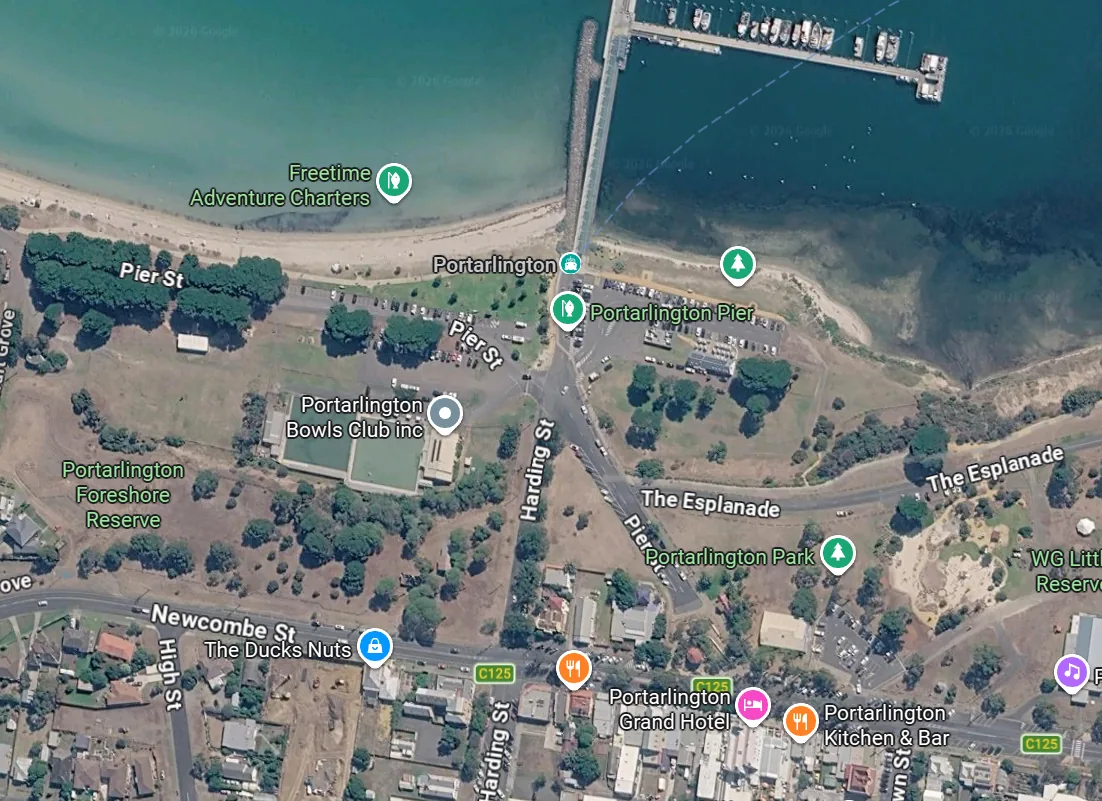
Squid here often hold just above the weed, waiting for prawns, baitfish and small prey to move across the edges. Because the water is generally shallower and calmer than the heads, you can fish with a more visual and relaxed style.
Portarlington can stay fishable when the inner-bay spots have gone murky — the weed and seagrass tend to hold cleaner water, and on the right day you can see the structure well enough to pick your edges.
Read the satellite view before you go: dark weed beds, clean sand windows, a nearby depth change, and a casting angle that keeps the jig working over an edge instead of landing in featureless water. That is the whole game here.
Best Time and Tide for Portarlington Pier
Dawn and dusk are the classic windows at Portarlington.
These grey-light periods are when squid are more likely to move from deeper beds into the shallower pier zone to hunt. Portarlington can still produce during the day, but the low-light windows are the ones most anglers should plan around first.
High tide is generally preferred, especially for the inner sections of the pier. Extra water over the weed gives squid more confidence to move shallow and gives your jig more room to work without constantly fouling.
Best Wind Direction for Portarlington Pier
A south or south-westerly breeze is often useful here because it can sit behind you and help casting distance and line control.
That wind advantage is one reason Portarlington is such a practical Bellarine option. When the breeze is uncomfortable elsewhere, this pier can still let you fish cleanly.
Because you are standing on a breakwall, casting distance matters. If the wind helps you reach past the pressured close water and into the darker weed edge, you have an advantage over anglers who are only covering the same easy line beside the wall.
Before driving, check the Eging Tactical Radar and compare Portarlington with Queenscliff, Point Lonsdale and the inner-bay options.
Squid Jig Size for Portarlington Pier
A size 3.5 squid jig is the recommended starting point for Portarlington.
This is different from Rye. Portarlington often holds more decent-size squid, and the breakwall rewards distance. A 3.5 gives you the weight to cast further and the bigger bait profile to pull the attention of hungry squid sitting around the darker weed.
A 3.0 still has a place when the squid are cautious or the weed is sitting high. A 2.5 is mostly a summer or very shallow-water adjustment. If you go too small by default, you may lose the distance and profile advantage that makes this breakwall worth fishing.
For more detail, read what size squid jig to use.
Sinking Rate and Line Setup
Standard and slow-sinking jigs are the best fit for Portarlington.
You want the jig to drift, hang and fall above the weed. Fast or deep-sinking jigs are usually the wrong tool unless you are fishing unusual depth or flow. In normal Portarlington conditions, a fast sinker will often bury itself in weed before a squid has time to commit.
PE 0.6 to 0.8 braid is a practical range here. Thinner line helps smaller jigs cast well, move naturally and stay readable above the weed.
For the technical side, read the Squid Jig Sinking Rate Guide Australia and Best Line for Squid Fishing Australia.
The Weed Clip: Fishing Sand Patches and Edges
Do not cast randomly across the weed and hope.
Look for sand patches, lighter gaps and edges within the weed beds. Squid often sit on the border between weed and open sand, waiting for prey to cross the gap.
A gentle hop works well here. Instead of violent rips, use small sharp twitches to make the jig look like a prawn or baitfish escaping without pulling it too far out of the strike zone.
Then pause. In calmer water, the pause does the work. Give the squid 5 to 10 seconds to track the jig as it flutters down toward the weed.
The Best Squid Jig Australia guide explains why clean sink posture and hang time matter so much in this kind of water.
Colours for Portarlington Pier
Portarlington has healthy green weed, so natural green, brown, prawn and seaweed-style patterns are strong daytime choices.
At night or during low light, switch toward red base, rainbow base, glow belly or soft pink to create a stronger silhouette.
If the water is clear, stay natural before going too loud. If visibility drops, use contrast. For a full colour system, read Squid Jig Colours Australia.
Landing, Ferry Traffic and Pier Etiquette
Portarlington Pier is moderate in height, but a landing net or telescopic gaff is still worth carrying. Smaller squid can sometimes be lifted, but better squid are easy to lose at the final moment if you rush.
Be mindful of the Portarlington ferry and local commercial boats. Never cast into their path, and be ready for wash when vessels move through or dock.
This is also a popular public pier for families and visitors. Keep casting space clear, manage your line carefully and wash away squid ink when needed.
For landing options, read the Best Squid Gaff Australia guide.
Recommended Gear
For Portarlington Pier, build around casting distance, weed control and a larger bait profile:
FAQ
Is Portarlington Pier good for squid fishing?
Yes. Portarlington Pier is a reliable Bellarine squid fishing option, especially around weed beds, high tide and dawn or dusk windows.
What squid jig size should I use at Portarlington Pier?
Start with a size 3.5 from the breakwall. It casts further and offers enough profile for the better squid Portarlington can produce. Drop to 3.0 or 2.5 only when shallow water, high weed or cautious squid make the bigger jig too much.
What is the best tide for Portarlington Pier squid fishing?
High tide is generally preferred because it gives squid more room to move over the weed and gives your jig more water to work above the structure.
What colours work well at Portarlington Pier?
Natural green, brown, prawn and seaweed-style colours are strong during clear daytime sessions. Red base, rainbow base, glow and soft pink are useful in low light or at night.