
Guide
Rye Pier Squid Fishing
Rye Pier fishing guide for squid: easy access and parking, night lights, clear water and forgiving ground — plus the right jig size, colours and wind.
Rye Pier Squid Fishing: Local Eging Guide
If you want the method behind the spot choice first, use the Eging Australia guide before narrowing the session to this location.
Rye Pier fishing is best known for one thing: it is arguably Melbourne’s easiest land-based squid spot for beginners, families and quick after-work or after-dark eging sessions. It is not the only productive pier on Port Phillip Bay, and it is never automatic, but the whole setup is unusually forgiving.
The reason is simple: Rye combines easy road access, a practical parking layout, walk-on pier access, usable night lighting, clear water, forgiving broken ground and current that is usually easier to manage than the faster water closer to the Heads.
For the wider structure, start with Melbourne Squid Fishing and Port Phillip Bay Squid Fishing.
June/winter update: Rye is a good first check when the water is clear and the wind is not a hard northerly. Start with what size squid jig to use, match clear or dirty water with Squid Jig Colours Australia, and check squid fishing regulations Australia before keeping calamari. Nearby, compare Blairgowrie Pier and Sorrento Pier when tide or wind changes.
Why Rye Is So Easy To Fish
Most beginner-friendly squid spots do one or two things well. Rye does several things well at the same time.
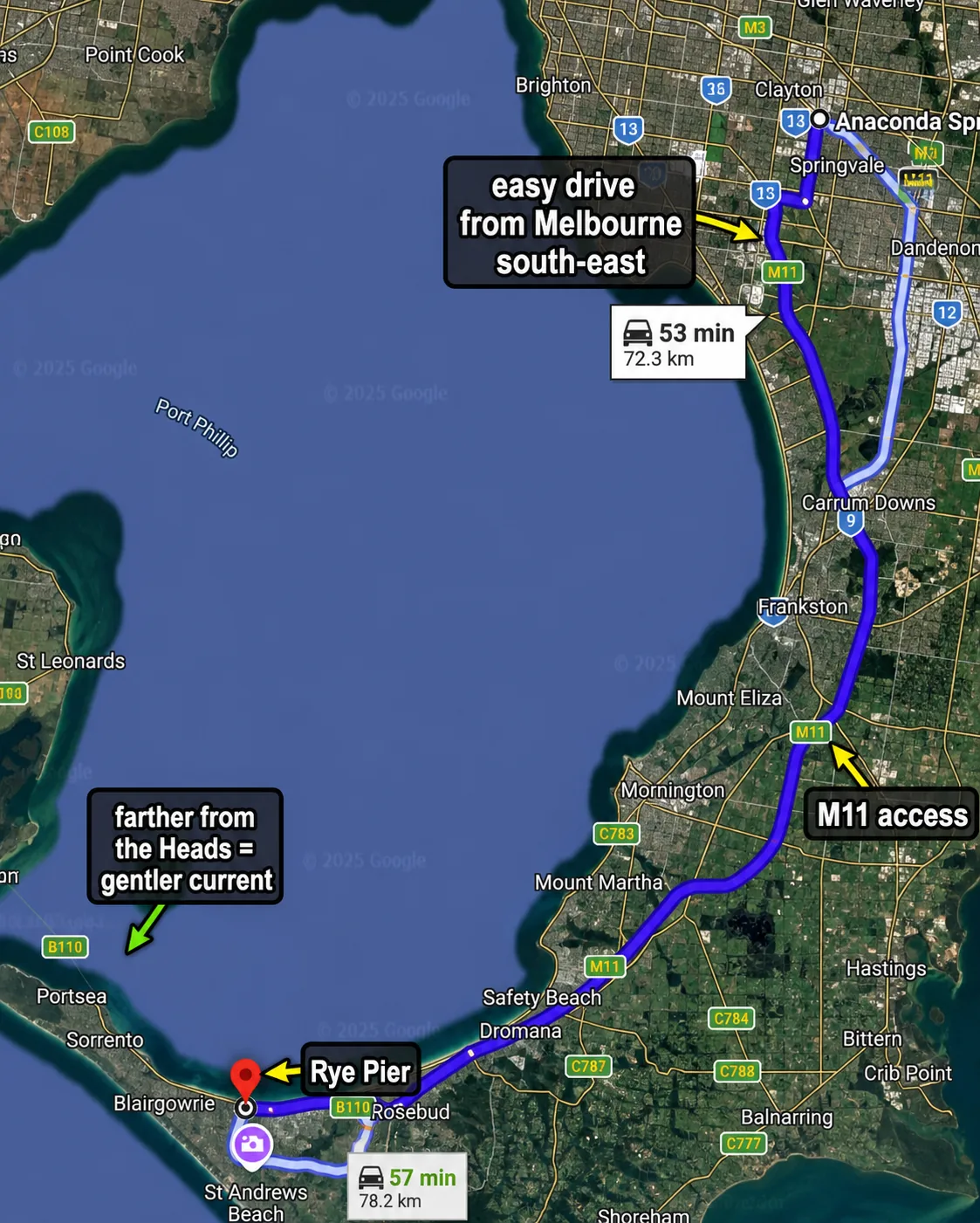
- Easy access: the drive down the Mornington Peninsula is straightforward, with the M11 taking you close to the southern bay beaches before the final local road section.
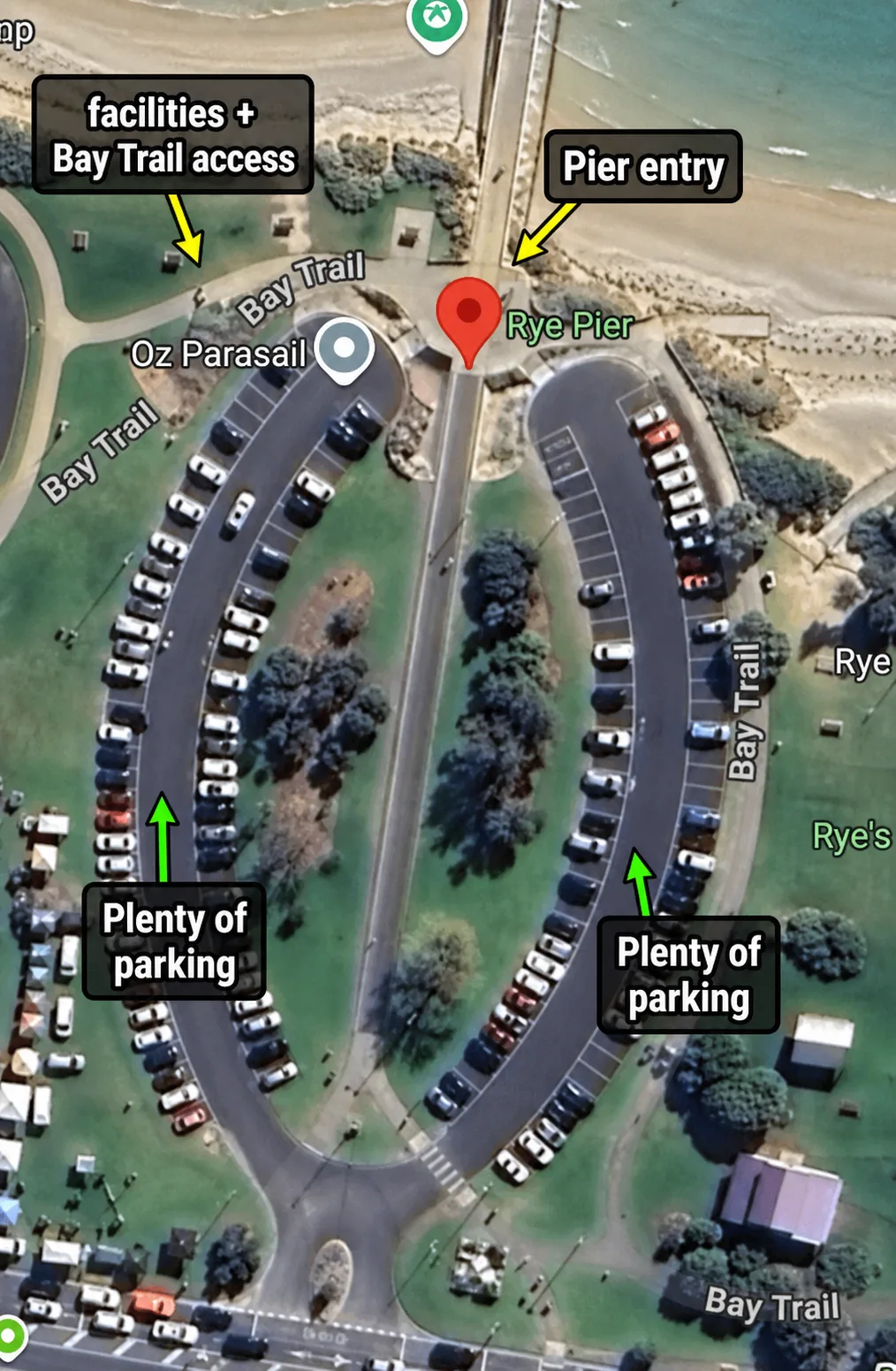
- Plenty of parking: the foreshore layout gives you more room than many tighter metro piers.
- Simple pier fishing: you can walk on, spread out and fish different sides of the structure without complicated rock access.
- Night lighting: the pier lights give beginners a visible starting zone after dark.
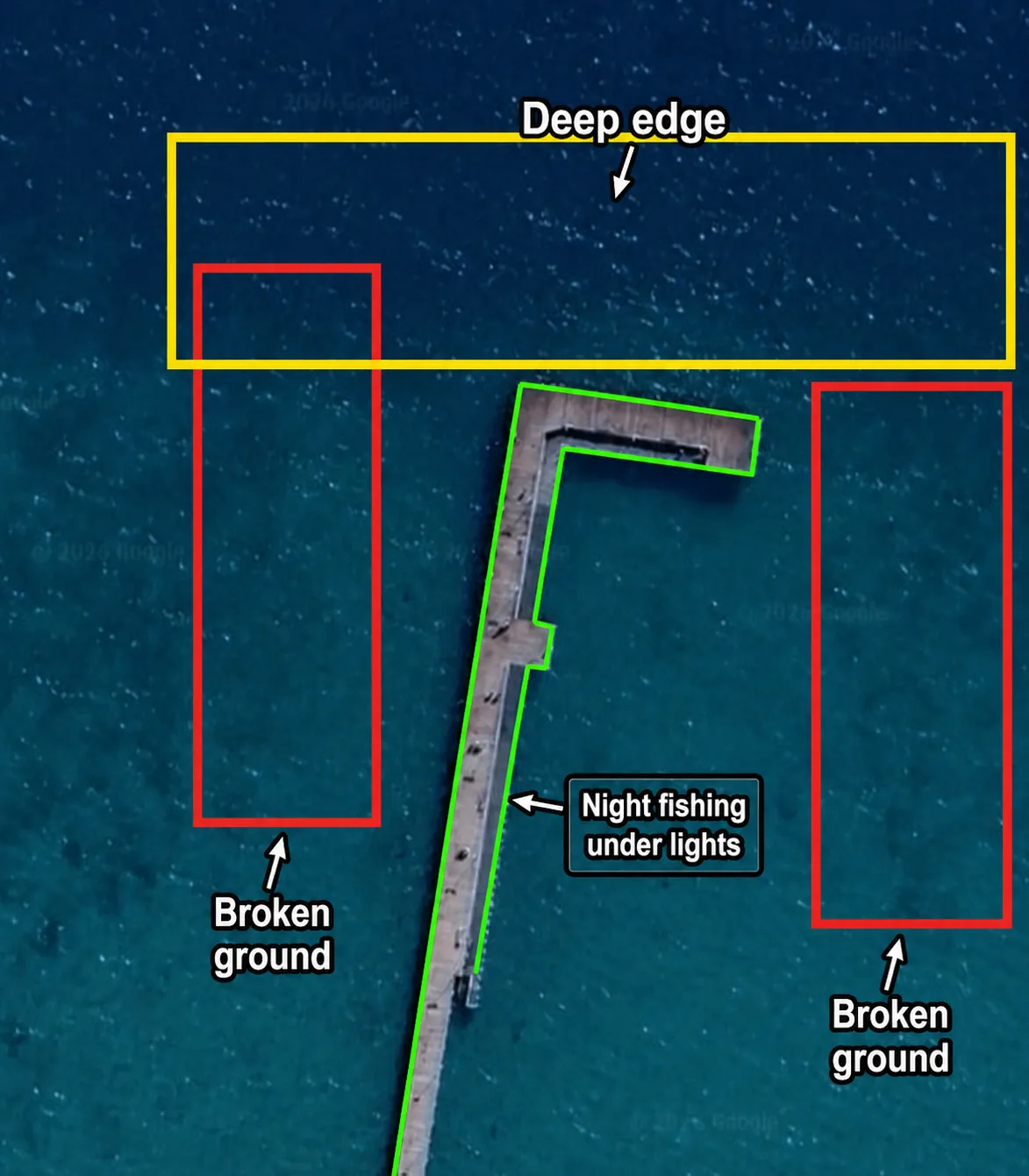
- Forgiving bottom: the broken ground is fishy without feeling like every cast is about to cost a squid jig.
- Manageable current: Rye sits farther from the Port Phillip Heads than places like Portsea and Point Lonsdale, so the current is usually less punishing for normal eging.
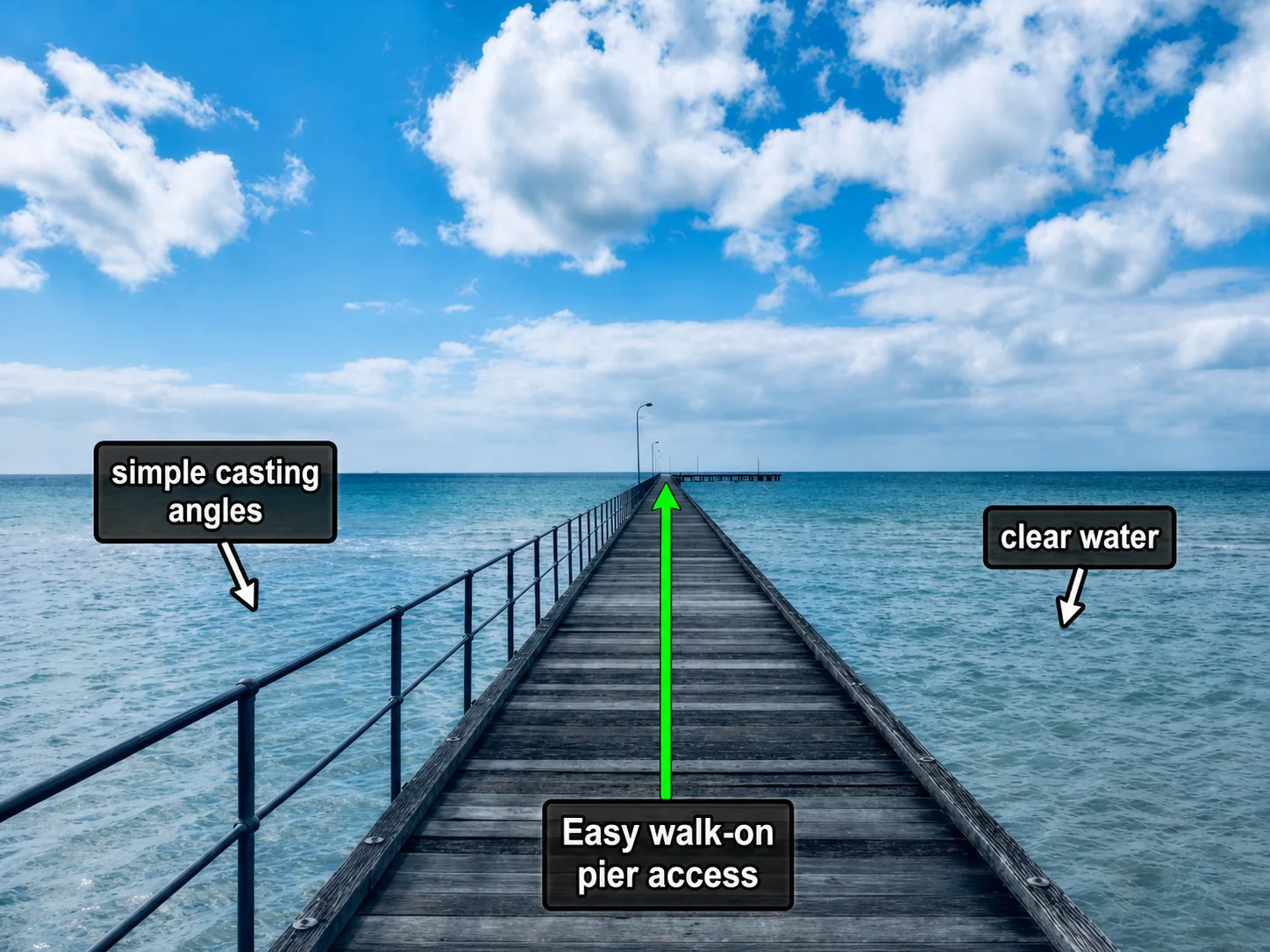
Easy Access From The M11
One reason Rye feels easier than many Melbourne squid locations is the drive. From the eastern and south-eastern suburbs, the Mornington Peninsula Freeway / M11 does a lot of the work, then drops you toward the southern peninsula beaches.
That matters because a good beginner squid spot is not only about the water. It also needs to be easy enough that people actually go, especially for dusk and night sessions.
Parking And Facilities Are Part Of The Advantage
Rye can still get busy in warm weather, school holidays and peak summer periods, but the foreshore parking layout is much friendlier than many compact metro piers. You are not usually dealing with the same tight cliff parking or long awkward walk-in.
That makes Rye a better option when you are taking a beginner, testing a new setup, fishing at night, or carrying a few jig boxes, a landing net or a gaff.
Wind Planning: Avoid Strong Northerly First
Rye is useful because it can give you a workable angle in many wind directions. The main one to be cautious with is a strong northerly, because it can push straight onto the pier, make line control ugly and turn a simple session into hard work.
In other wind directions, Rye often gives you at least one side, corner or casting angle worth checking. That does not mean every wind is perfect. It means Rye is more forgiving than a spot where only one exact direction works.
Before driving, check the Eging Tactical Radar. Use it to compare wind speed, direction, water clarity and nearby Mornington Peninsula alternatives. If the radar is showing a hard northerly, Rye may still be possible, but it stops being the easy choice.
Bottom Structure: Broken Ground Without Constant Snags
Rye is not just a plain sand pier. Around the pier you get broken ground, weed patches, edge changes and deeper water within casting range. That is why squid can hold around the area instead of only passing through.
The important beginner detail is that Rye’s broken ground is usually more forgiving than heavy reef or thick weed. You still need to count the sink and keep contact with the jig, but the bottom does not feel like a lure graveyard every cast.
That is a huge reason Rye is easier: you can learn sink time, pause length and line control without losing confidence after three casts.
Deep Edge Without Heads-Level Current
The deeper edge around Rye gives squid room to move and gives anglers a real target beyond the immediate pier shadow. At the same time, Rye is far enough from the Heads that the current is usually not as fierce as the faster water around Portsea, Sorrento outer areas or Point Lonsdale.
That makes the jig easier to manage. A beginner can start with a normal 3.0, feel the sink, work the pause and adjust from there instead of fighting heavy current from the first cast.
Night Fishing Under The Pier Lights
Rye can be especially beginner-friendly after dark because the lights create a visible fishing zone. Small bait and small squid can move around the lit water, and the edge between light and darker water gives you a simple place to start casting.
Do not only drop the jig straight under the brightest light. Cast along the edge, let the jig fall on light tension, then use gentle lifts and pauses. If small squid are visible, downsize to a 1.8, 2.0 or 2.5. If you are fishing wider water for better squid, a 3.0 remains the easy starting point.
For more night detail, read Night Squid Fishing Australia.
Squid Jig Size For Rye Pier
A 3.0 is the best all-round starting size at Rye Pier.
Because the spot can hold both small and better-size squid, you do not want to lock yourself into only one style. A 3.0 gives you casting distance, control and enough profile for general pier fishing.
A 2.5 is useful when squid are smaller, the water is very clear, or you are fishing under the pier lights at night. A 3.5 can make sense when you want a bigger profile or more distance, but Rye does not demand heavy gear the way some rougher or deeper spots do.
For the full logic, read what size squid jig to use and the Squid Jig Sinking Rate Guide Australia.
Squid Jig Colours For Rye Pier
Because the water is often clear, natural colours deserve first cast during the day.
A good Rye rotation looks like this:
- natural prawn, olive or baitfish tones in clear daylight
- soft pink when squid follow but do not commit
- glow belly or full glow around dusk and night lights
- orange or red foil if the light drops or the water loses clarity
For the full colour system, use Squid Jig Colours Australia.
How To Fish Rye Pier Cleanly
Rye is a good place to slow down and actually read what the jig is doing.
Because the water is often clear and the snag risk is not as punishing as some rock spots, you can experiment with sink count, pause length and jig size without feeling like every mistake costs a lure.
Work different parts of the pier, watch the water, and adjust to the squid you can see. If you are seeing small squid under lights, downsize. If you are fishing broader water for better squid, start with the 3.0 and work the edges more patiently.
The Best Squid Jig Australia guide is useful here because Rye rewards good jig balance and controlled fall more than frantic rod work.
Recommended Gear
For a buyer’s shortlist matched to this spot, see Best Squid Jig for Rye Pier on eging.com.au, or browse squid jigs Australia.
If you are building a practical Rye Pier setup, these are the most useful next clicks:
FAQ
Is Rye Pier the easiest squid fishing spot near Melbourne?
It is one of the easiest land-based squid spots near Melbourne because it combines road access, parking, pier lighting, clear water, forgiving broken ground and manageable current.
What wind is best for Rye Pier squid fishing?
Rye can fish in many wind directions, but strong northerly wind is usually the one to be most cautious with. Check the Eging Tactical Radar before driving.
What squid jig size should I use at Rye Pier?
Start with a 3.0. Use 2.5, 2.0 or 1.8 when squid are small or sitting under the pier lights, and consider 3.5 when you want more profile or distance.
Is Rye Pier good for night squid fishing?
Yes. At night, the pier lights can gather bait and smaller squid, and smaller jigs can work well when fished with a gentle fall and patient pauses.