
Guide
San Remo Jetty Squid Fishing
San Remo Jetty squid fishing: Phillip Island bridge current and slack water — size 3.5-4.0 jigs, nose weights, pylon fishing and safe landing.
If you want the method behind the spot choice first, use the Eging Australia guide before narrowing the session to this location.
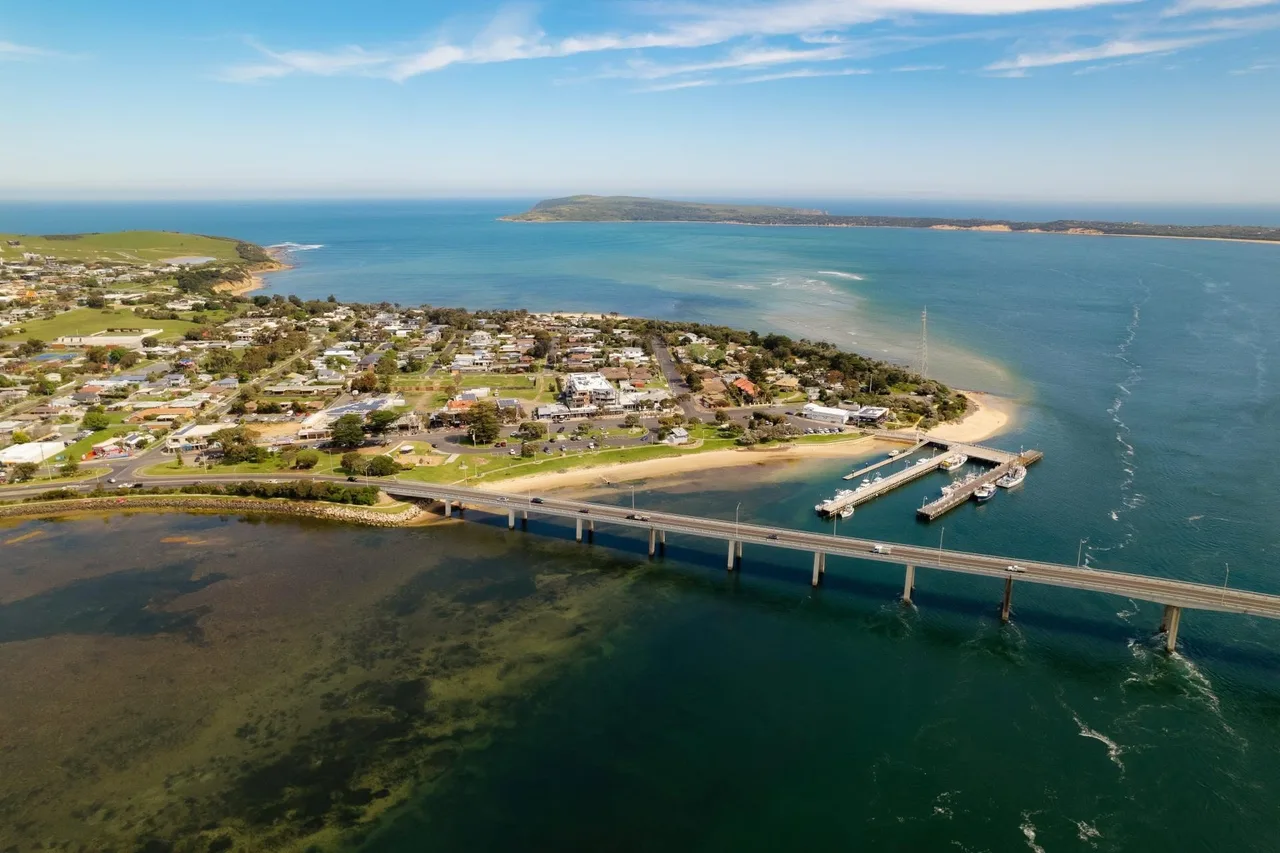
San Remo Jetty is one of Western Port’s most serious land-based squid fishing locations. It is famous for large Southern Calamari, but it is also famous for current that can make normal eging feel pointless if you arrive at the wrong time.
This is not a cast-and-hope pier. San Remo is about timing the tide, managing depth and understanding how squid use the jetty, bridge pylons, shadow lines and nearby shallow flats.
For the broader area, start with Melbourne Squid Fishing and Western Port Squid Fishing.
360° Field Views: Five-Point Jetty Tour
Select points 1–5 on the schematic to open the corresponding real 360° photograph. Drag to look around the decks, harbour and shoreline. The numbers match the five supplied field photos; the diagram is not a survey or navigation map.
Rui’s field notes: the green railing edge near point 2 is the first choice, facing towards the pier entrance. The green outer edge near point 3 is the second choice, facing Phillip Island Bridge. At both spots, the preferred window is 30 minutes before and after the tidal current turns. Green lines mark the fishing positions; the numbered buttons open the corresponding photo viewpoints.
Deep Channels and the Funnel Effect
San Remo sits where water is squeezed between the mainland and Phillip Island. That funnel effect can make the current feel like a river.
The water is often clear and oceanic, but it moves with serious speed. During heavy flow, a standard jig can plane up in the water column before it gets anywhere near the bottom third.
The jetty itself and the huge bridge pylons nearby create excellent ambush structure. They also create complex eddies, pressure lines and snag zones, so clean line control matters more here than raw casting distance.
The Slack Water Necessity
At San Remo, the tide decides whether you can fish properly.
Rui’s preferred window at points 2 and 3 is the 30 minutes before and after the tidal current turns. Outside that window, the current is often too strong to get a jig down cleanly, even with added weight.
If you only have one short session, plan around slack water rather than a random convenient time. This is one of those places where arriving one hour late can turn a good forecast into a frustrating session.
Before leaving, check the Eging Tactical Radar and match the tide with wind, water clarity and swell.
Night Sessions and Shadow Lines
San Remo is a well-lit precinct, and night eging can be very productive when the current window lines up.
Squid often hang back in the shadows of the jetty or bridge pylons, then dart into the light to grab baitfish and prawns. Do not only cast into the brightest water. Work the edge where light fades into shadow.
This is especially important in clear water because squid can track the jig from a distance before committing.
Squid Jig Size and Nose Weights
A size 3.5 is the minimum starting point at San Remo.
Carry 3.5 deep models and size 4.0 jigs as standard choices. A light city setup may be comfortable, but it will struggle to cut through this water when the flow starts moving.
Clip-on nose weights in the 3g to 5g range are very useful here. If the braid is bowing badly and you cannot feel the tick of the bottom or lower water column, add weight.
Use extra weight when:
- the jig planes up before reaching depth
- your line forms a big belly in the current
- a normal
3.5is not staying connected - you cannot feel the lower third of the water column
For more technical detail, read the Squid Jig Size Guide and Squid Jig Sinking Rate Guide Australia.
Line Setup for San Remo
A high-quality PE 0.8 to PE 1.0 braid is ideal.
Thin braid helps because it has less surface area for the current to push. That lets the jig sink straighter and keeps you better connected. Pair it with 15lb to 20lb fluorocarbon leader for abrasion resistance around pylons, rocks and larger squid.
For setup detail, read Best Line for Squid Fishing Australia and the Squid Fishing Leader Guide.
Managing the Drift
Cast well up-current into the flow.
Let the jig sink as it drifts back toward you. By the time it reaches your position, it should be in the bottom third of the water column. If you cast down-current, the line tension often drags the jig up toward the surface.
Because the water is deep and moving, use stronger high sweeps to make the jig dart properly. Soft little hops can get swallowed by the current and barely move the lure.
The Best Squid Jig Australia guide is useful here because San Remo rewards jigs that sink straight, hold posture and stay readable in heavy water.
Pylon Work and the Left-Hand Shallows
Do not ignore the water directly below the jetty.
Large calamari often hold close to the pylons. Drop the jig vertically and work it with short, sharp darting motions along the structure. Keep it close enough to the ambush zone, but not so close that the current drags it into a snag.
The left-hand side of the pier toward the shoreline and shallow flats can also be highly productive. This is an important option if you do not want to carry a gaff. After hooking a squid, you may be able to walk it carefully toward the beach and slide it onto the sand instead of lifting it vertically from the jetty.
That does not mean rushing the fish. Keep steady pressure, watch the line angle and use the shore landing only when the path is clear and safe.
Colours for San Remo Jetty
San Remo water is often clear, so natural greens, browns and blues are strong daytime choices.
In deeper channel water, low light or night sessions, UV purple, red-base, glow belly and stronger silhouette patterns are practical because they stay visible around shadow lines and pylons.
If the current is too strong for the jig to reach depth, fix sink control before changing colour. For the full colour system, read Squid Jig Colours Australia.
Landing, Pelicans and Tourist Traffic
Do not pole-lift a large squid against heavy current. That is a quick way to break a rod or lose the squid.
San Remo is also known for pelicans and heavy visitor traffic. Be mindful of birds when casting, never leave scraps or bait on the jetty, and keep your casting arc clear.
This is a major tourist hub, so ink etiquette matters. Bring a bucket and wash down ink immediately after landing squid.
For landing gear, read the Best Squid Gaff Australia guide.
Recommended Gear
For San Remo Jetty, build around current, depth and landing options:
FAQ
What is the best tide for San Remo Jetty squid fishing?
Rui’s preferred window at points 2 and 3 is the half hour before and after the tidal current turns, when slower flow makes jig control easier.
What squid jig size should I use at San Remo Jetty?
Use size 3.5 as the minimum. Carry 3.5 deep models and size 4.0 jigs for stronger current and deeper water.
Can I land squid without a gaff at San Remo?
Sometimes, yes. The left-hand side toward the shoreline and shallow flats can let you walk a hooked squid toward the beach and slide it onto the sand, but only if the path is clear and safe.
What colours work best at San Remo Jetty?
Natural greens, browns and blues are strong during clear daytime sessions. UV purple, red-base and glow patterns are useful in deeper water, low light and night sessions.