
Guide
Beaumaris Pier Squid Fishing
Beaumaris Pier guide: public access and parking, the walk down Pelican Quays, the southerly that shuts it down, and the BMYS webcam to check first.
Beaumaris Pier is the small public-access pier beside the Beaumaris Motor Yacht Squadron on Pelican Quays, near the boat ramp on the metro side of Port Phillip Bay. It is a compact, sheltered squid spot, not a long exposed public pier. That is exactly why it can be useful: when bigger metro locations are uncomfortable in wind, Beaumaris can still offer clean, controlled eging water.
For the wider Melbourne location system, start with Melbourne Squid Fishing and Port Phillip Bay Squid Fishing. For the method behind the casts, use the Eging Australia guide.
June/winter update: Beaumaris is a sheltered clear-water pocket, so start subtle before going loud. Use what size squid jig to use for the 2.5 call, match clear or night colours with Squid Jig Colours Australia, and check squid fishing regulations Australia before keeping a feed. Nearby, compare Mordialloc Pier and Mornington Pier when the metro side wind changes.
Quick Local Summary
Beaumaris is a small-water night spot. The pier is public access, but the lower Beaumaris Motor Yacht Squadron car park is not public parking unless you are a BMYS member. Park up top, walk down, fish quietly, and keep the setup subtle.
The standout local jig choice is RUI KR148 in size 2.5. Several local customers treat that colour as the Beaumaris confidence jig because it covers the clean, calm, low-current water so well.
Parking, Walking Route and Public Access
This is the part that confuses first-timers.
Park in the upper public parking area around Beach Road, Ray Street and Charman Road, then walk down toward the water via Pelican Quays. If you are using the annotated route map for this guide, read it like this: green is the parking area, and the pink line is the walk down to the pier.
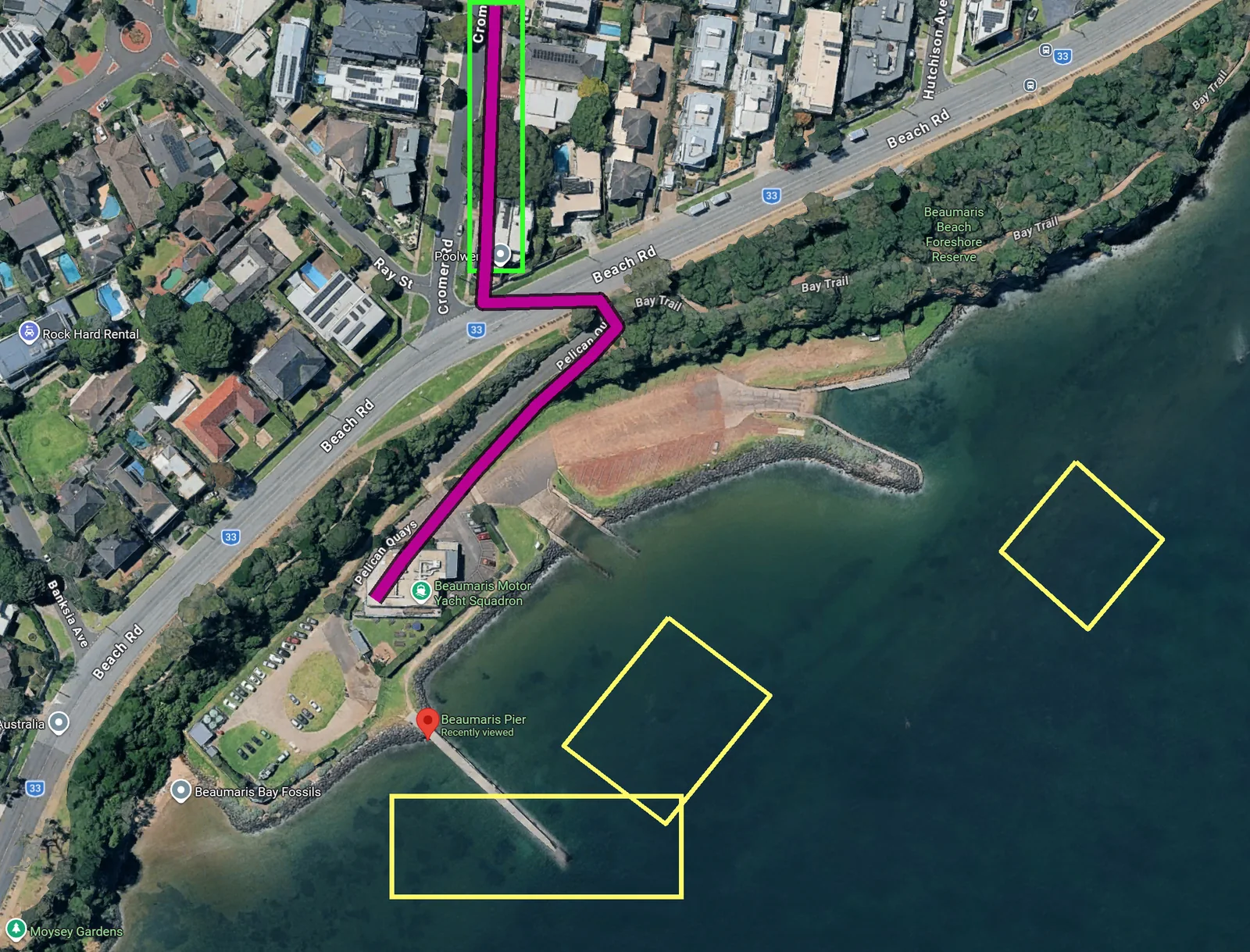
Do not park in the lower car park by the Beaumaris Motor Yacht Squadron unless you are a member. That lower parking area is for BMYS members. The important distinction is simple: the lower car park is members-only, but the pier itself is public access.
From the road, follow the path down and enter through the small public gate beside the Squadron. Respect the signs, stay out of member-only facilities, and keep the access quiet and tidy. This is a small shared area, so good behaviour matters more here than it does on a big open pier.
The Small Gate Warning
The little gate beside BMYS is easy to underestimate, especially at night.
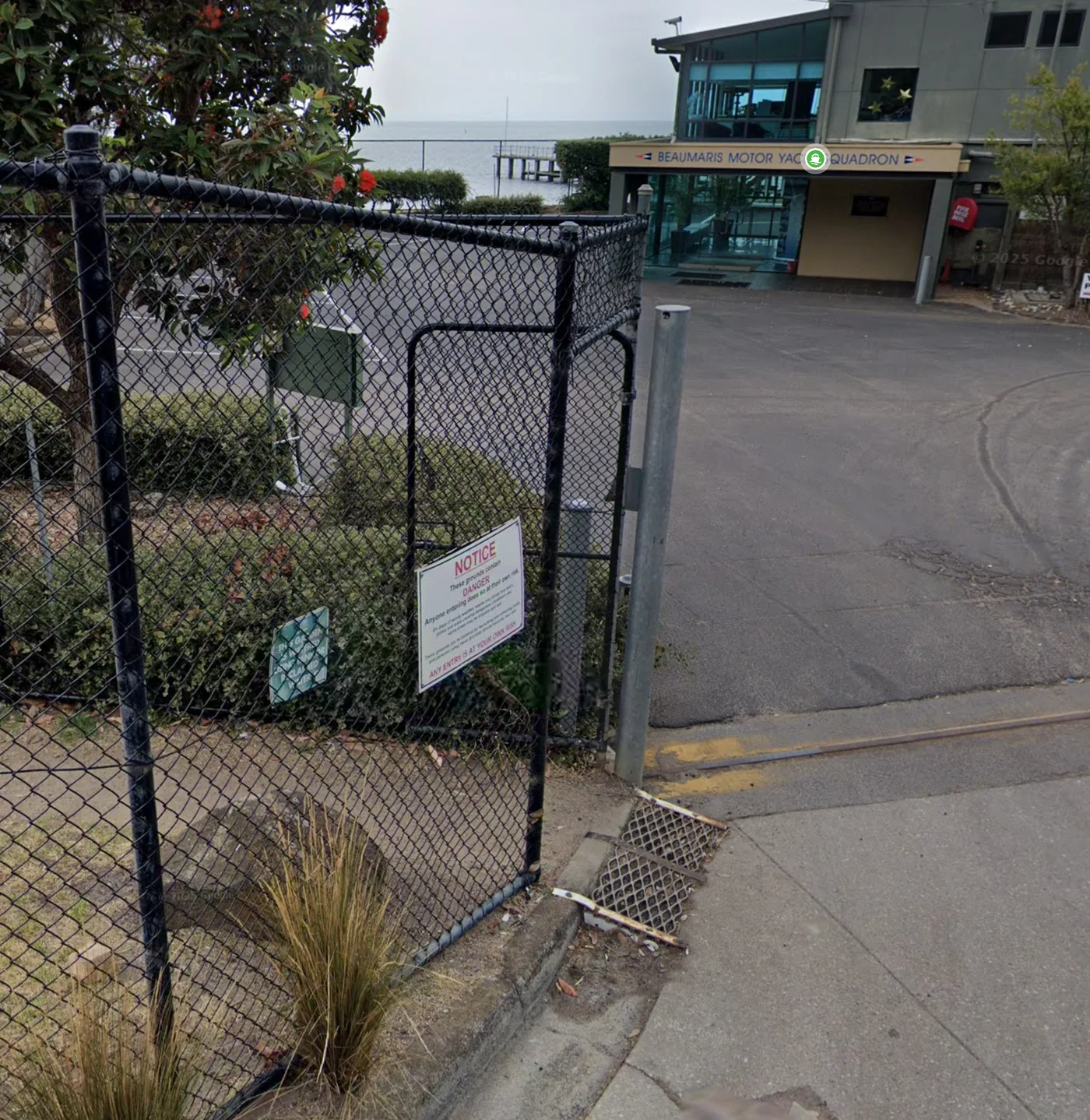
Carry your rod carefully through that gate. If you are walking in the dark with a long eging rod rigged, it is very easy to clip the gate or fence and damage a rod tip. Break the rod down before the gate if you need to, or at least lead with the butt and keep the tip clear. That warning comes from a very real rod-tip lesson.
Best Time for Beaumaris Pier Squid Fishing
Night is usually the best window.
On calm evenings the boat ramp and club area settle down, the water becomes easier to read, and squid can move around the pier lights, pylons and nearby weed edges with less disturbance. Daytime can still produce if the water is clean, but good-weather days often bring more boat and pedestrian activity around the ramp.
If you only have one Beaumaris session to choose, pick a calm night with clean water and enough darkness around the structure for squid to move confidently.
Wind and Weather: Only Southerly Is the Problem
Beaumaris is protected on three sides, so wind does not hit it the same way it hits open piers and reef edges. That sheltered layout is why it works as a backup when other metro spots are too uncomfortable.
The main wind to avoid is southerly wind. A south wind pushes straight into this pocket and can chop up the water, hurt line control and make the small pier feel less stable. In most other wind directions, Beaumaris can stay surprisingly fishable if the water is not dirty.
Check the BMYS Webcam Before You Go
Before driving, check two things:
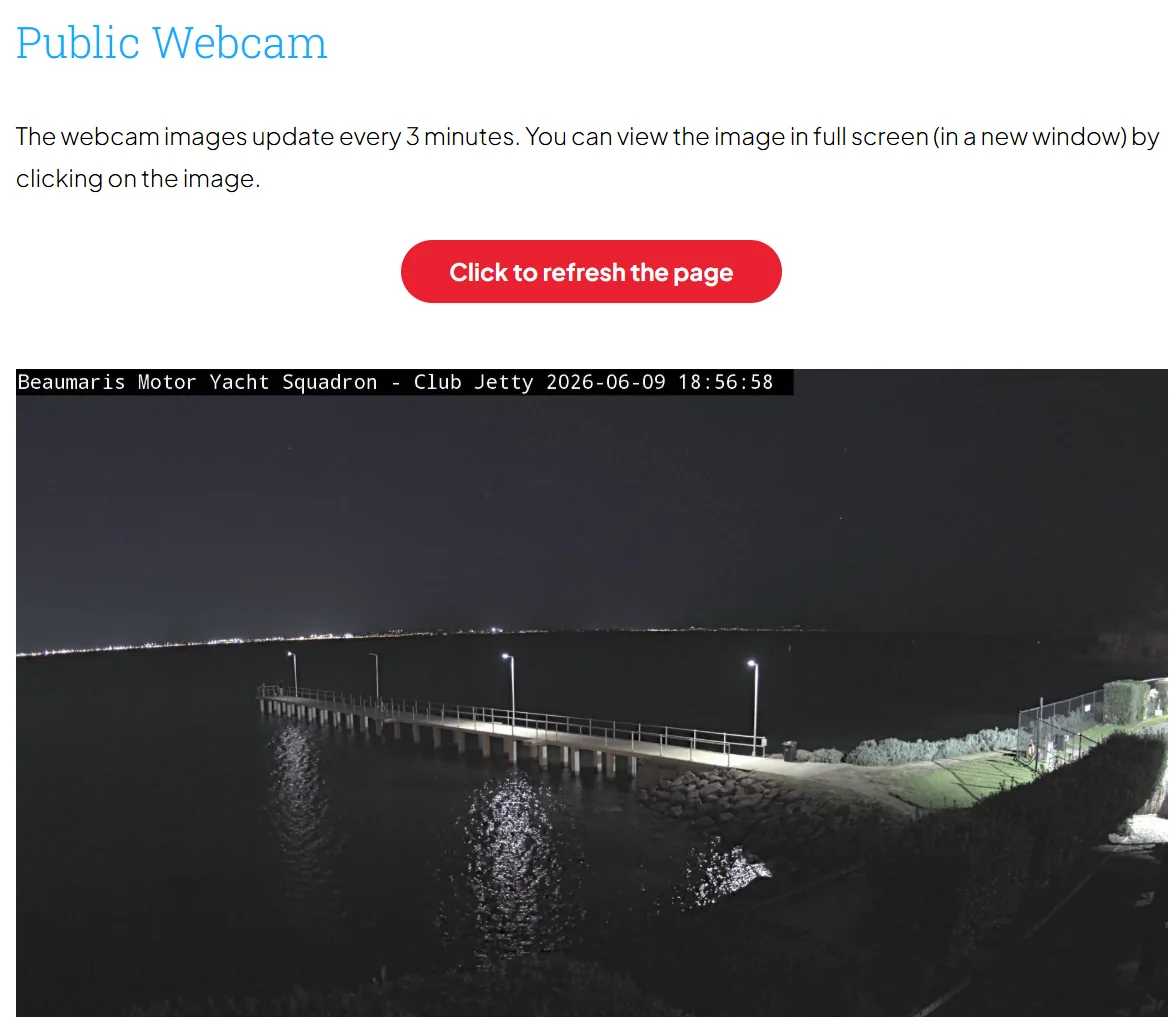
- The Beaumaris Motor Yacht Squadron weather and webcam page. BMYS notes that the public webcam image updates every three minutes, so it is useful for checking the actual pier and water condition before leaving home.
- The Eging Tactical Radar for the wider wind, weather and water-clarity picture.
Where to Cast
Beaumaris is not about giant casts. Work the water close to the pier, the edges of the lights, the pylons, the small breaks in weed and the darker weed/sand lanes beside the structure.
If you are using the annotated aerial map, the productive water is the marked water around the pier and the nearby weed/sand transitions. Start with short controlled casts along the pier edge, then fan out only if the water is clear and there is room to do it safely.
Because the spot is compact, avoid casting across other anglers or into boat movement. Quiet line control beats distance here.
Squid Jig Size for Beaumaris Pier
A 2.5 squid jig is the default size for Beaumaris.
The water is sheltered, the current is usually light, and the goal is to let the jig hang naturally without looking too aggressive. A size 2.5 is easier to keep in the strike zone and less likely to rush through the calm water.
A 3.0 can still work if you need a little extra casting distance or profile, but it should not be the first pick. For most nights, a well-worked 2.5 is better than a bigger jig worked too fast.
For more detail, read what size squid jig to use and the Squid Jig Sinking Rate Guide Australia.
Best Squid Jig Colour for Beaumaris
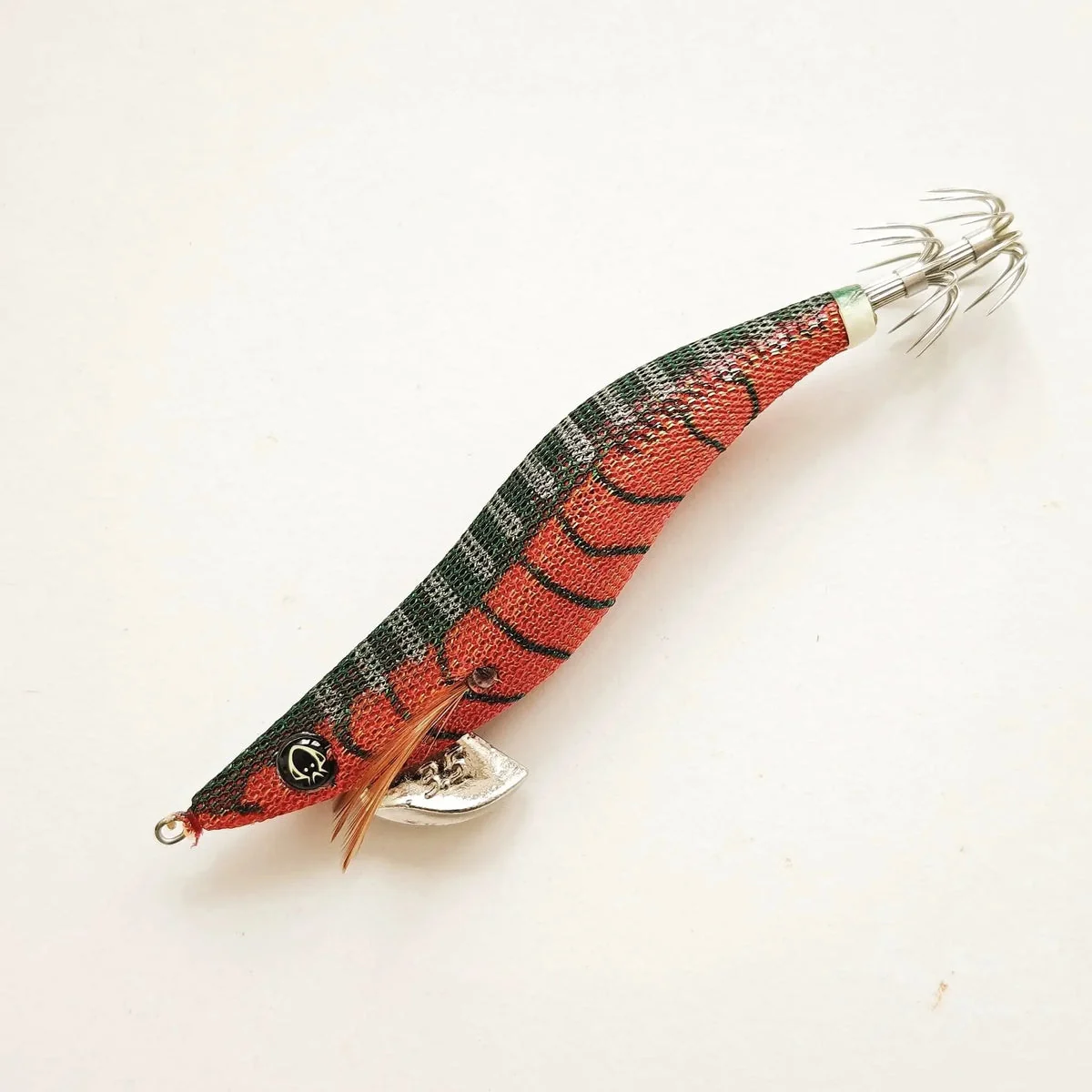
The local go-to is RUI KR148 in 2.5.
That is not a generic colour suggestion. Multiple customers have reported that Beaumaris is one of those spots where KR148 in 2.5 can be the only colour they need. It gives enough visibility without becoming too loud in the calm, protected water.
Build a small backup spread around it:
- RUI KR148, size 2.5 - first choice for Beaumaris.
- Glow or glow-belly 2.5 - for darker nights and stronger pier-light contrast.
- Soft pink 2.5 - when squid are present but shy.
- Natural prawn 2.5 - when the water is very clean.
- Orange 2.5 or 3.0 - only when you need extra visibility in dirtier water.
For the full colour system, read Squid Jig Colours Australia. To buy the local confidence jig, see RUI KR148 squid jig or browse squid jigs Australia.
How to Fish Beaumaris Cleanly
Beaumaris rewards quiet, patient eging.
Make short casts, let the jig sink properly, then work it with small lifts and pauses. Do not rip the jig hard through the whole pocket. In calm water, the bite can be a slight stop, a soft pull, or a change in line angle rather than a dramatic strike.
Keep the rod angle sensible, watch the line, and give the jig enough time to sit near the weed edges and pylons. If the water is clear, slow down before changing colour. If the water is dirty, rotate colour before completely changing the retrieve.
For technique, use How to Work a Squid Jig and When to Strike Squid Fishing.
Landing and Local Practicalities
Beaumaris is not a huge high-platform landing problem, but the space is tight and the area can involve people, boats, fences and the small gate. Have a landing plan before you hook a squid.
If you keep a squid, measure it calmly before packing up: the how to measure squid properly guide explains the mantle-based method and avoids mixing total length with legal or practical size notes.
A landing net is enough for many sessions. If you regularly fish higher piers as well, read do you need a squid gaff and keep a compact option in the car. Move carefully around wet surfaces and avoid letting a hooked squid pull you into an awkward rod angle beside the pier.
And once more: protect your rod when you leave through the little gate at night.
Recommended Beaumaris Setup
For a simple Beaumaris kit:
- Egi Rods Australia for a light, responsive squid rod.
- 2500 reel.
- PE 0.6-0.8 braid.
- Fluorocarbon leader.
- RUI KR148 in 2.5 as the first jig.
- One glow 2.5 and one soft pink 2.5 as backups.
- Landing net or compact telescopic gaff.
Useful gear links:
FAQ
Is Beaumaris Pier public access?
Yes, the pier is public access. The lower Beaumaris Motor Yacht Squadron car park and member facilities are not public. Park up top and walk down to the pier.
Where should I park for Beaumaris Pier squid fishing?
Use the upper public parking around Beach Road, Ray Street and Charman Road, then walk down Pelican Quays. Do not park in the lower BMYS members-only car park unless you are a member.
What wind is bad for Beaumaris Pier?
Southerly wind is the main problem because it blows into the pocket. The spot is protected on three sides, so many other wind directions can still be fishable if the water is clean.
Should I check the BMYS webcam before going?
Yes. The BMYS weather and webcam page gives a live look at the pier area, and the public webcam image updates every three minutes.
What is the best squid jig for Beaumaris Pier?
Start with RUI KR148 in size 2.5. It is the strongest local confidence colour for this spot, with glow and soft pink as useful backups.
What is the best time to fish Beaumaris Pier?
Night is usually best because the boat ramp and club area quiet down, the water is calmer, and squid move around the pier structure with less disturbance.