
Guide
Fresh Squid, My Way
How to keep, clean and cook fresh Australian squid — with easy calamari recipes: garlic butter, salt-and-pepper, ginger spring onion, stir-fry and more.
Here’s the one thing I’ll die on a hill about: don’t overcook squid. That’s the whole game. Cook it fast — 60 to 90 seconds — or cook it slow — 30 minutes plus. Land anywhere in the middle and you have made an eraser.
Everything below is how I actually cook the stuff I pull out of the bay. Nothing fancy. Most of us put ten times more effort into catching squid than cooking it, so I keep this end simple.
Before the pan: keep it cold and clean
Before keeping squid, check the current rules for your state or territory in the squid fishing regulations guide.
Then look after the catch properly:
- keep squid cool as soon as practical
- avoid leaving squid in direct sun
- use a clean bucket, bag or esky
- keep sand, bait scraps and dirty water away from the flesh
- clean your knife and board before food prep
Fresh squid is beautiful eating, but it gets messy fast if it sits warm or dries out.
Simple cleaning steps
Work somewhere easy to wash down. Squid ink stains, and fresh squid can be slippery.
- Hold the tube in one hand and the head in the other.
- Gently pull the head and internal organs out of the tube.
- Remove the clear quill from inside the tube.
- Peel the outer skin if you want a cleaner white tube.
- Cut the tentacles below the eyes and remove the beak from the centre.
- Rinse lightly in cold water.
- Pat dry before cooking.
Do not soak squid for ages. A quick clean and a dry surface cook better.
Garlic Butter Calamari — the one I make most
If I have had a good morning out, this is what is happening for lunch. Nine times out of ten. It is stupidly quick and it lets the squid actually taste like squid.
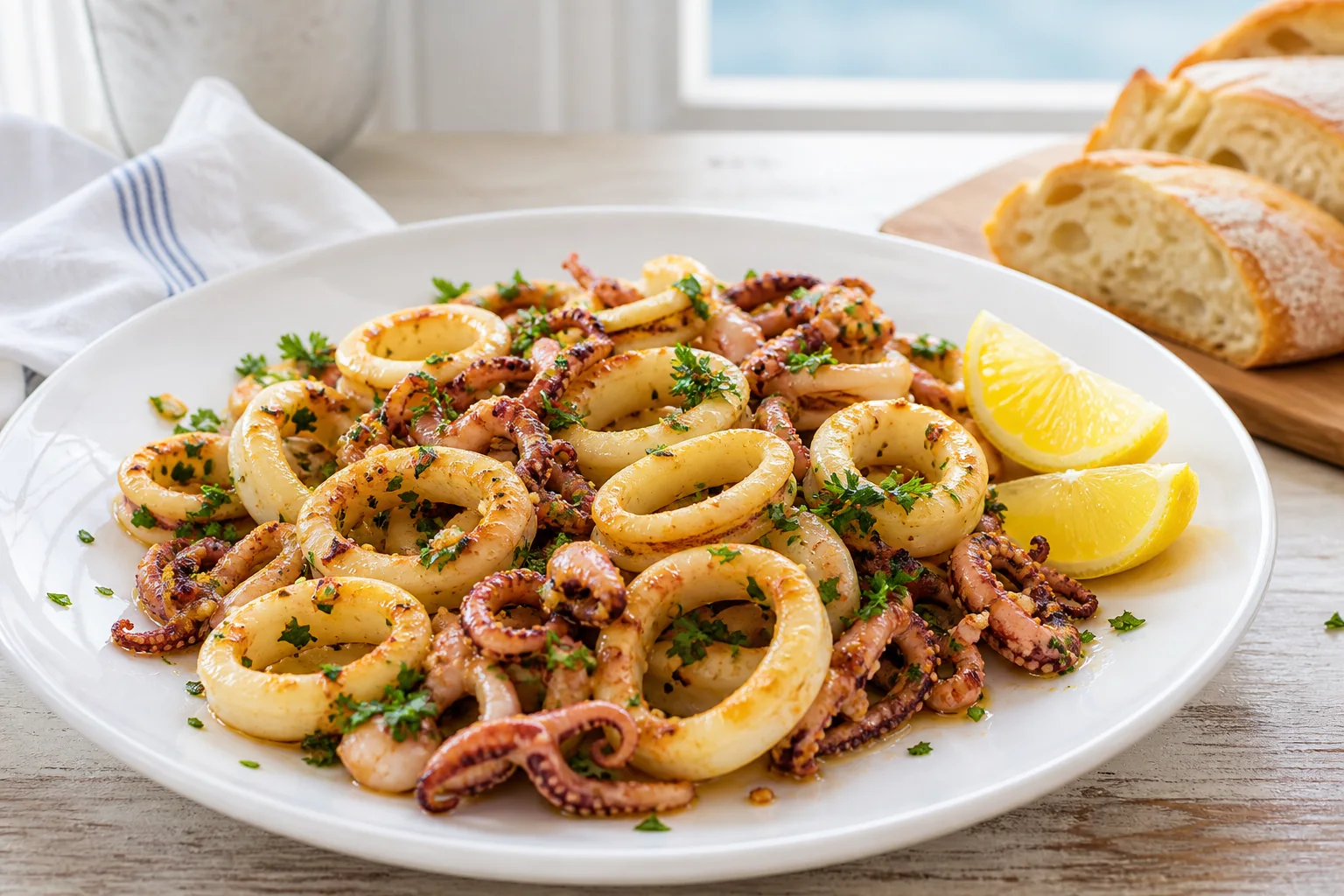
You’ll need:
- 500g fresh squid — tubes and tentacles
- 3 cloves garlic, minced
- 2 tbsp butter
- 1 tbsp olive oil
- juice of 1 lemon
- salt and pepper
- a handful of chopped parsley
How I do it:
Clean the squid and slice the tubes into rings. Then — and this is the bit people skip — pat them properly dry with paper towel. Wet squid steams instead of searing, and steamed squid goes tough.
Get the pan ripping hot before anything goes in. Add the oil and butter, then the squid, and cook it for 60 to 90 seconds, stirring the whole time. Throw the garlic in for the last 20 seconds because any earlier and it burns. Pull the pan off the heat, hit it with lemon, parsley, salt and pepper, and that is it.
Serve it straight away with crusty bread or a salad. Do not let it sit.
Salt & Pepper Squid
This is what I do with the little ones. Crowd-pleaser, gone in about four minutes flat at my place.
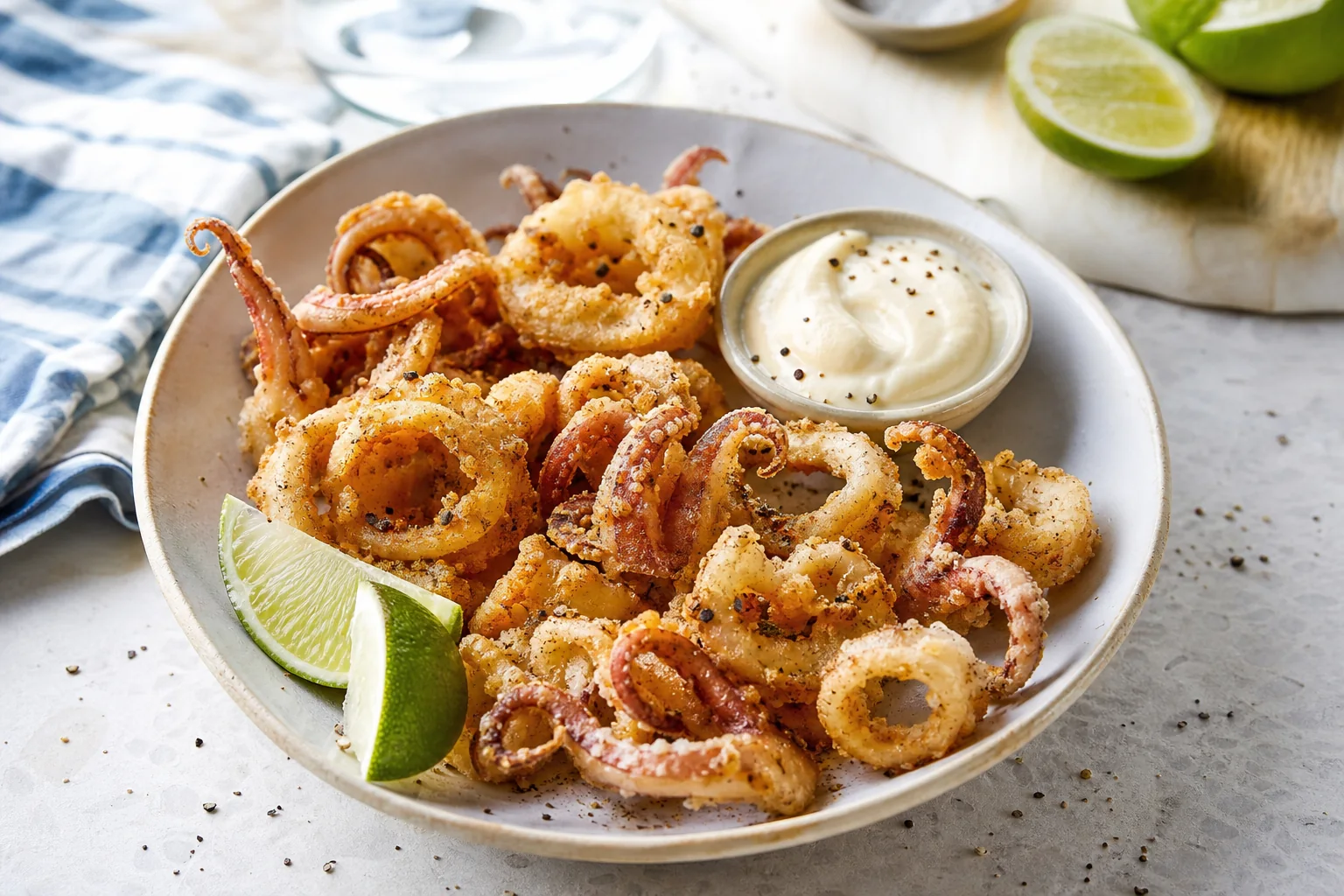
You’ll need:
- fresh squid
- cornflour
- salt
- cracked black pepper
- five-spice powder, optional but I usually add it
- oil for frying
How I do it:
Slice the squid and dry it really well again — same rule as always. Toss it in cornflour seasoned with salt, pepper and five-spice. You want a light coating, not a thick batter.
Fry at 190°C for about 60 seconds, until it is just golden. Drain it and season again the second it comes out of the oil while it is still hot enough to grab the seasoning.
Lime wedges and a bit of aioli on the side and you are done.
Chinese-style Ginger & Spring Onion Squid
When I want something that feels like a proper meal rather than a snack, this is the move. It tastes like the squid you would get at a good Cantonese place, minus the wait.
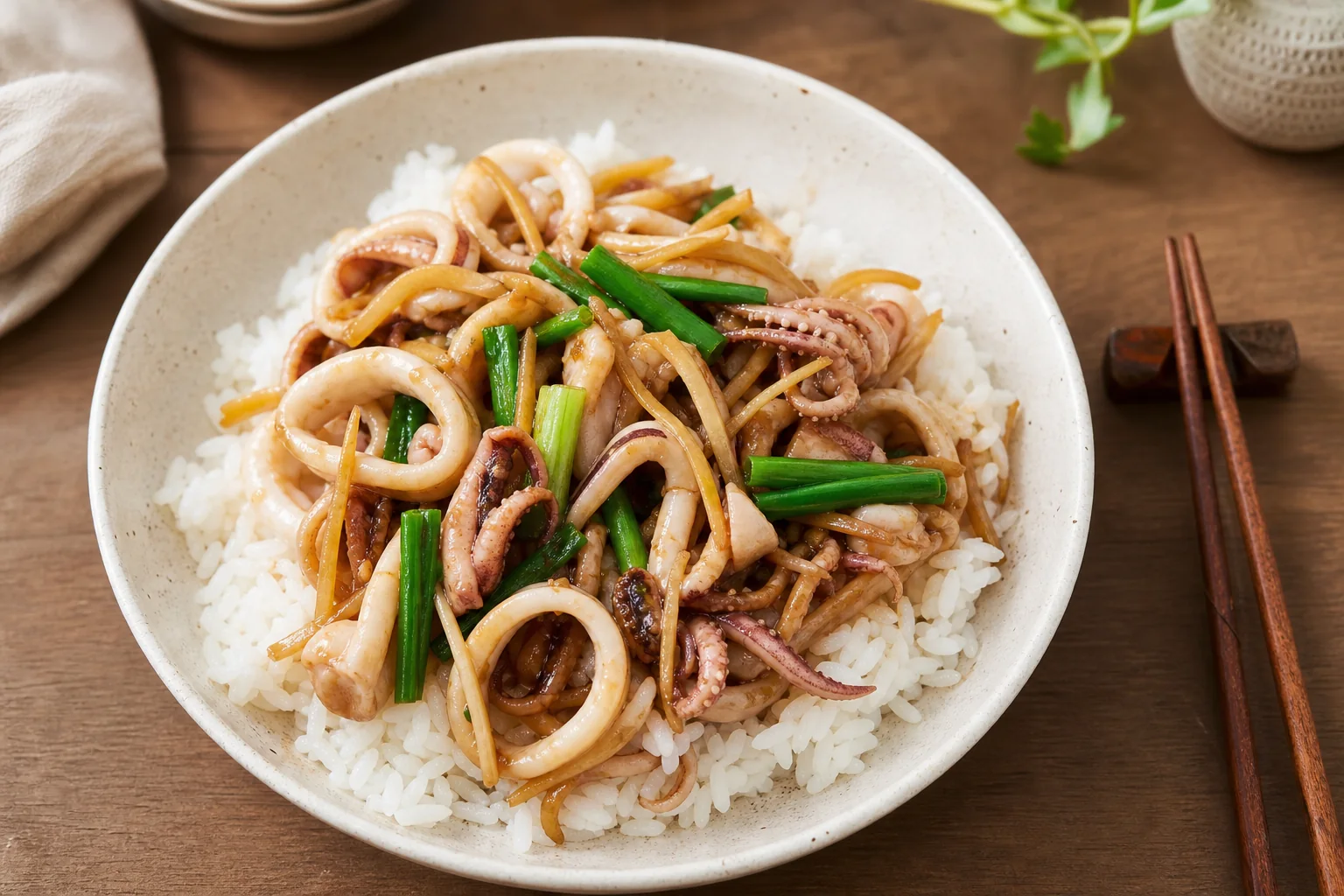
You’ll need:
- 500g squid
- 2 tbsp ginger, julienned
- 4 spring onions
- 1 tbsp soy sauce
- 1 tsp sesame oil
How I do it:
Stir-fry the ginger for about 30 seconds to wake it up. In goes the squid for a minute, then the soy and spring onions, and a final toss for another 30 seconds. Off the heat.
Over steamed rice. Every time.
Cantonese Squid & Prawn Stir-Fry with Greens
This is the one I make when I have come home with squid and a few prawns, and I want a proper one-plate dinner that feeds the whole table. It is the dish that looks like good Cantonese takeaway — squid, prawns and a pile of greens under a glossy oyster-sauce gravy — except you caught the squid yourself and it cost you a fraction of the price.
It has a few more moving parts than the rest of this page, but the golden rule still runs the whole show: the squid goes in last and only cooks for about a minute. Everything else is just timing.
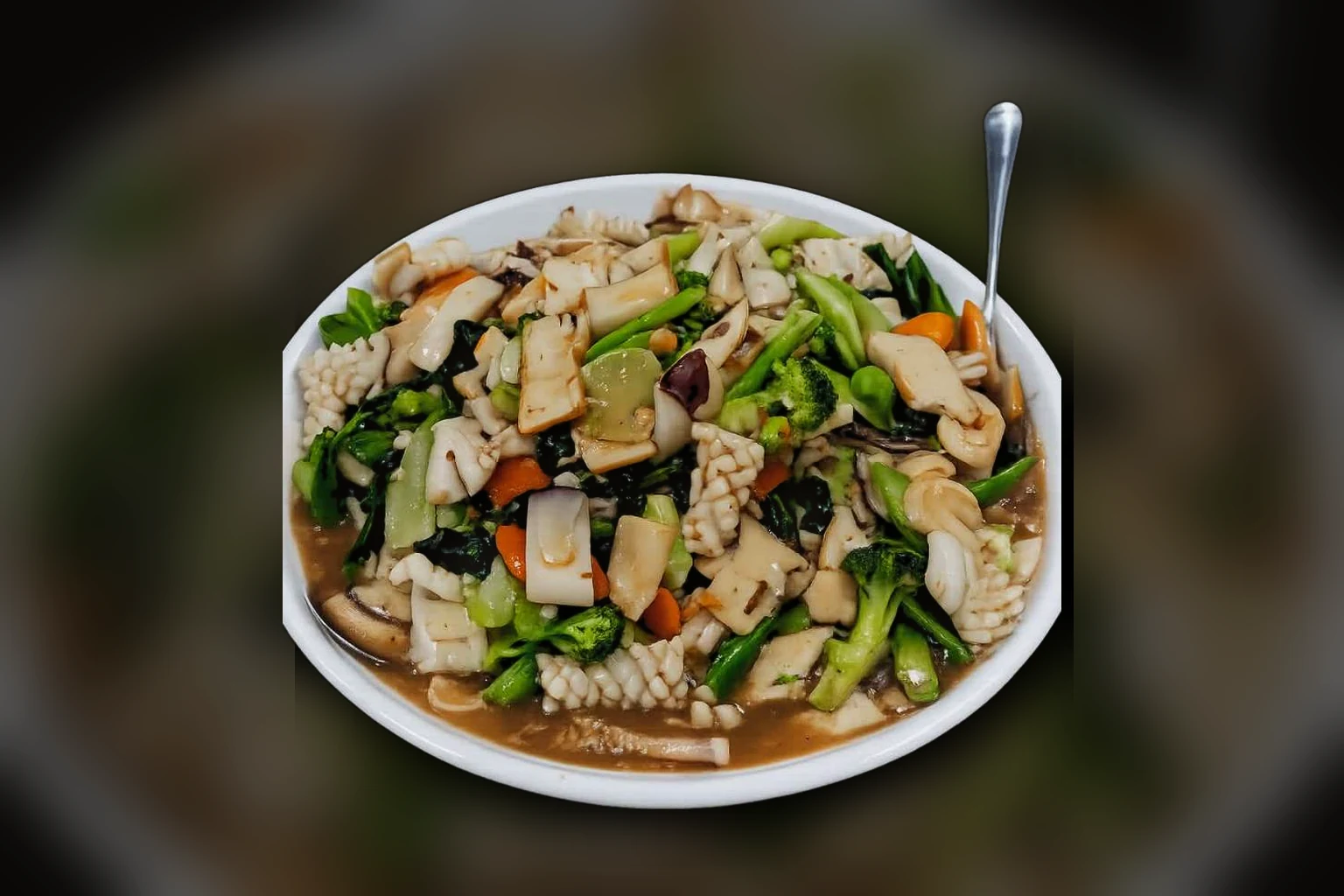
You’ll need:
- 400g fresh squid — tubes scored and cut into pieces, plus tentacles
- 200g prawns, peeled
- 1 head broccoli, cut into florets
- 1 bunch gai lan (Chinese broccoli), cut into lengths
- 1 carrot, sliced thin on the angle
- a handful of mushrooms — shiitake or king oyster, sliced
- 1 cup fried tofu puffs or firm tofu, cubed
- 3 cloves garlic, minced
- 1 thumb ginger, sliced
- 2 tbsp oyster sauce
- 1 tbsp light soy sauce
- 1 tsp sesame oil
- 1 cup chicken or vegetable stock (or water)
- 1 tbsp cornflour mixed with 2 tbsp cold water
- oil for the wok
How I do it:
Score the squid tubes in a light criss-cross and cut them into bite-sized pieces — the scoring is what gives you those pretty curls and helps the gravy grab on. Then pat the squid and prawns properly dry, same rule as everything else here. Wet seafood steams and goes tough.
Get the carrot and broccoli stems blanched first — 2 minutes in boiling water — because they take the longest and nobody wants raw carrot in a stir-fry. Drain them.
Now work fast and in order. Hot wok, splash of oil, then the garlic and ginger for 20 seconds until they smell good. In go the firmer vegetables — carrot, broccoli, gai lan stems and mushrooms — and stir-fry for 2 minutes. Add the tofu and the leafy gai lan tops.
Pour in the stock, oyster sauce and soy, and let it come up to a simmer. Stir the cornflour slurry again and pour it in — it turns the liquid into that glossy gravy in about 30 seconds.
Now, and only now, the seafood. Prawns first for 30 seconds, then the squid for about a minute, just until it turns opaque and curls. The second the squid is white and tender, kill the heat. Finish with the sesame oil.
Straight onto a big plate with steamed rice on the side. If the squid is tender, you nailed it.
Squid Ink Pasta
If you have had a big day and pulled in enough squid, save the ink sacs. Do not bin them. This is the reward.
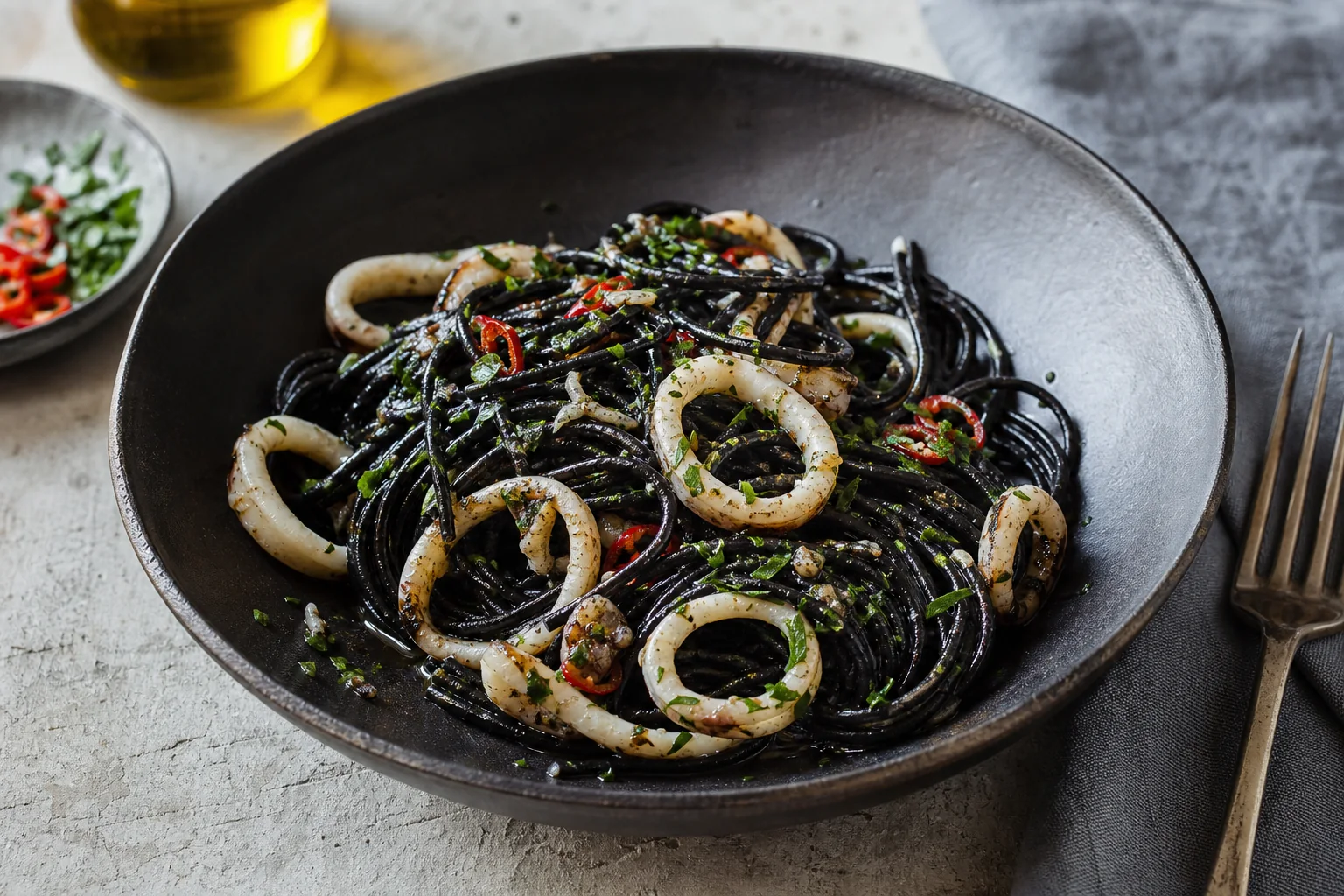
Cook some garlic and chilli down in olive oil, add your squid rings and the ink, then toss the whole lot through pasta. It goes a dramatic black and tastes deeply of the sea. It looks like you tried way harder than you did.
If you are new to using ink, keep it clean and separate from grit or organs. For most quick meals, cleaning around the ink carefully is easier than trying to save every sac.
Squid Jerky
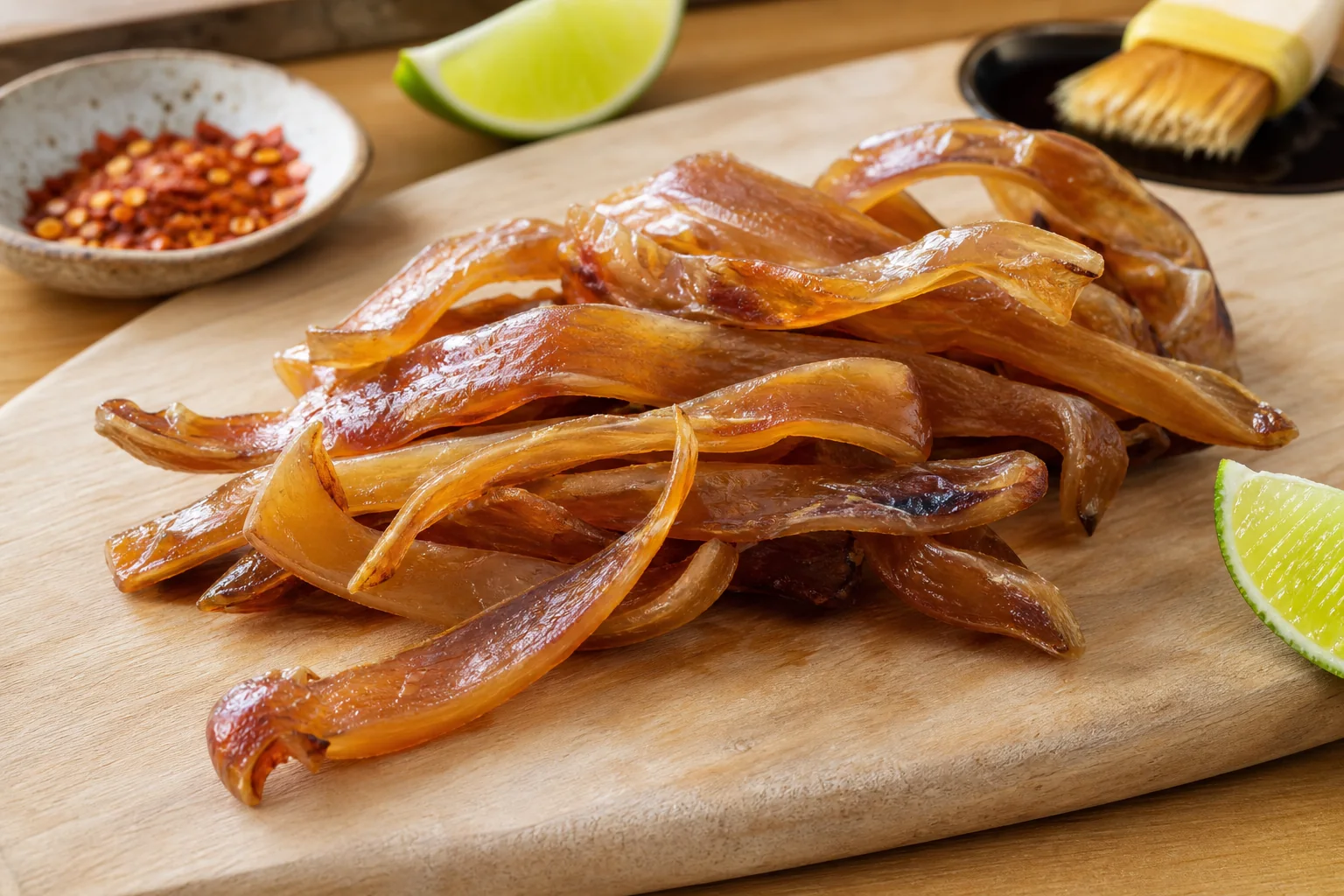
This is what I do with the big fellas. Larger squid over a kilo have thick, firm tubes that hold up beautifully to drying. The little ones just shrivel into nothing, so save the big ones for this.
It is a slow cook, which suits squid perfectly: fast or slow, never in between. It makes a cracking snack for the next trip out.
You’ll need:
- large squid tubes, the thicker the better
- 4 tbsp soy sauce
- 1 tbsp sugar or honey
- 1 tbsp mirin, or a splash of rice wine
- 1 tsp sesame oil
- 1 tbsp ginger, grated
- 2 cloves garlic, minced
- chilli flakes, optional but I always go for it
- a squeeze of lime
How I do it:
Clean the tubes and slice them into strips about a centimetre wide, going with the grain so they do not curl up too much. Pat them dry — same rule as everything else here.
Mix everything else into a marinade and let the strips sit in it for at least a couple of hours, overnight if you have the patience. The longer they sit, the deeper the flavour.
Lay the strips out in a single layer, not touching. Then dry them low and slow: a dehydrator at 65°C for 4 to 6 hours, or your oven on its lowest setting with the door cracked open for steam to escape. You are after chewy and leathery, not crisp and snapped. Start checking around the 4-hour mark; thinner strips finish quicker.
Let them cool fully, then keep them in an airtight jar. They will last a couple of weeks in the fridge if they make it that long.
My rule of thumb for fresh bay squid
Most of mine comes out of Port Phillip Bay or Western Port, and I sort them by size before I even decide what I am cooking:
- Small, under 500g: salt & pepper, no question.
- Medium, 500g to 1kg: garlic butter, or straight on the grill.
- Large, over 1kg: slice into steaks, stuff and roast them, or turn them into jerky. The thick tubes are made for drying.
One more trick: if you want the flesh a touch more tender, freeze it for 24 to 48 hours before you eat it. Sounds counterintuitive for something you just caught fresh, but it works.
After-catch checklist
Bring these on a serious session:
- esky or insulated bag
- ice pack or ice
- zip bags or container
- towel
- small knife
- spare water for rinsing gear
- gloves if you prefer cleaner handling
That setup keeps your squid better and your car much cleaner after a productive night session.
Final answer
Fresh squid with olive oil, garlic and lemon is hard to beat. A 90-second pan fry is usually all it needs. Keep it legal, keep it cold, clean it neatly and cook it fast.