
Guide
Clifton Springs Squid Fishing
How to fish Clifton Springs for squid from the pier and boat ramp break wall, with shallow weed casting angles, best wind logic
Clifton Springs is a shallow-water squid spot with two land-based zones worth treating separately: the pier and surrounding shallow weed beds, and the boat ramp break wall. The pier is where you sort out wind, casting angle and seasonal jig size; the break wall is more about timing, because a safe high-tide night can put better squid close to the rocks.
The common thread is weed. Do not waste too many casts over empty pale sand. Look for the darker green and brown patches, the edges where weed meets sand, and the rock or pylon structure that lets squid hunt with cover nearby.
360° Field View: Clifton Springs Pier
This real 360° field photo shows the water, pier working space and harbour structure at Clifton Springs. Drag around the view to inspect the shallow water, casting room and the structure that shapes your fishing angles before planning a session.

Drag to look around. Use the mouse wheel, + and − keys, or the controls to zoom.
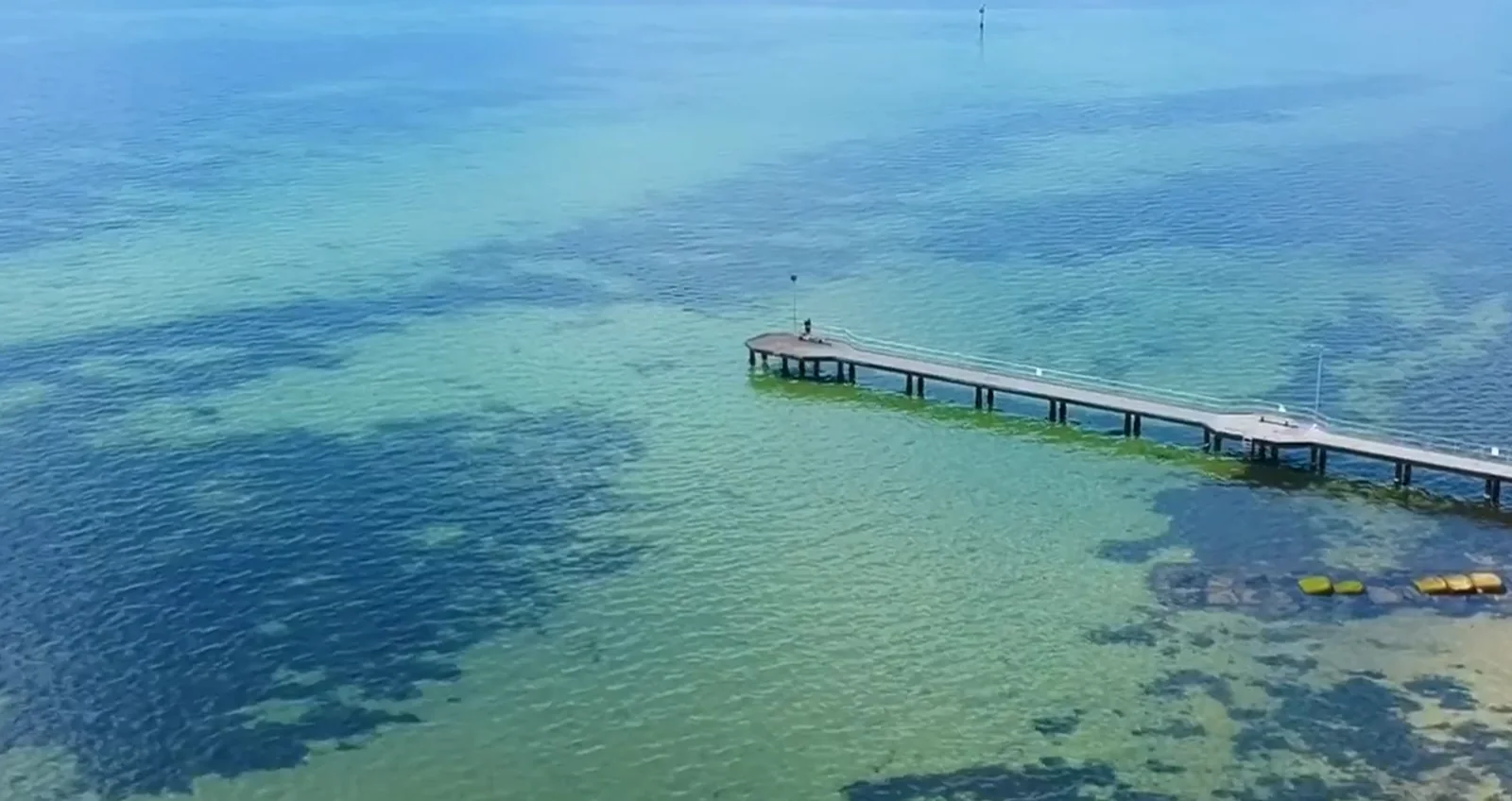
Pier Weed Beds: Wind And Casting Angle
Forget the fixed compass rule at Clifton Springs. The water is shallow and the good ground is patchy, so the best wind is simply the one that lets you drop a jig into the dark weed and swim it back across the edge without the line bowing and going slack. Some days that is a southerly at your back; other days it is whatever angle gets you tight to the weed.
If the wind is pushing your line off the weed, move your feet and change your casting angle before you change anything else. Still can’t stay connected? Step up in jig size, shorten the cast, or wait for a cleaner window. Use the Squid Fishing Weather Guide and the Eging Tactical Radar to plan, then make the final call from the casting angle actually in front of you.
Seasonal Squid Jig Size
Because Clifton Springs is shallow, sink rate matters as much as size. The seasonal starting point is:
| Season | Starting jig | Why it works |
|---|---|---|
| Winter | 3.5 slow sinking | Better casting distance, stronger profile and enough hang time over shallow weed |
| Spring | 3.0 | A balanced size when squid are active but the water is still not deep |
| Autumn | 3.0 | Good control over weed edges during stable, cooling water |
| Summer | 2.5 | Useful when the water is very shallow, clear, calm or pressured |
The winter choice is important: a 3.5 slow-sinking squid jig can be excellent in shallow water because it casts well and shows a stronger silhouette without diving straight into the weed. The word “slow” is doing the work. A fast-sinking 3.5 is a different tool and can become frustrating here.
For spring and autumn, a 3.0 is the clean starting point. In summer, especially when the water is clear or squid are cautious, a 2.5 can stay above the weed longer and look less intrusive. For the broader size logic, read the Squid Jig Size Guide and Squid Jig Sinking Rate Guide.
Boat Ramp Break Wall: High Tide Night Window
The boat ramp break wall is a different decision. I would pay most attention to this area on a safe high tide at night. The extra water lets squid move over the shallow weed and along the rock edge. Darkness can also make larger squid more confident around structure.
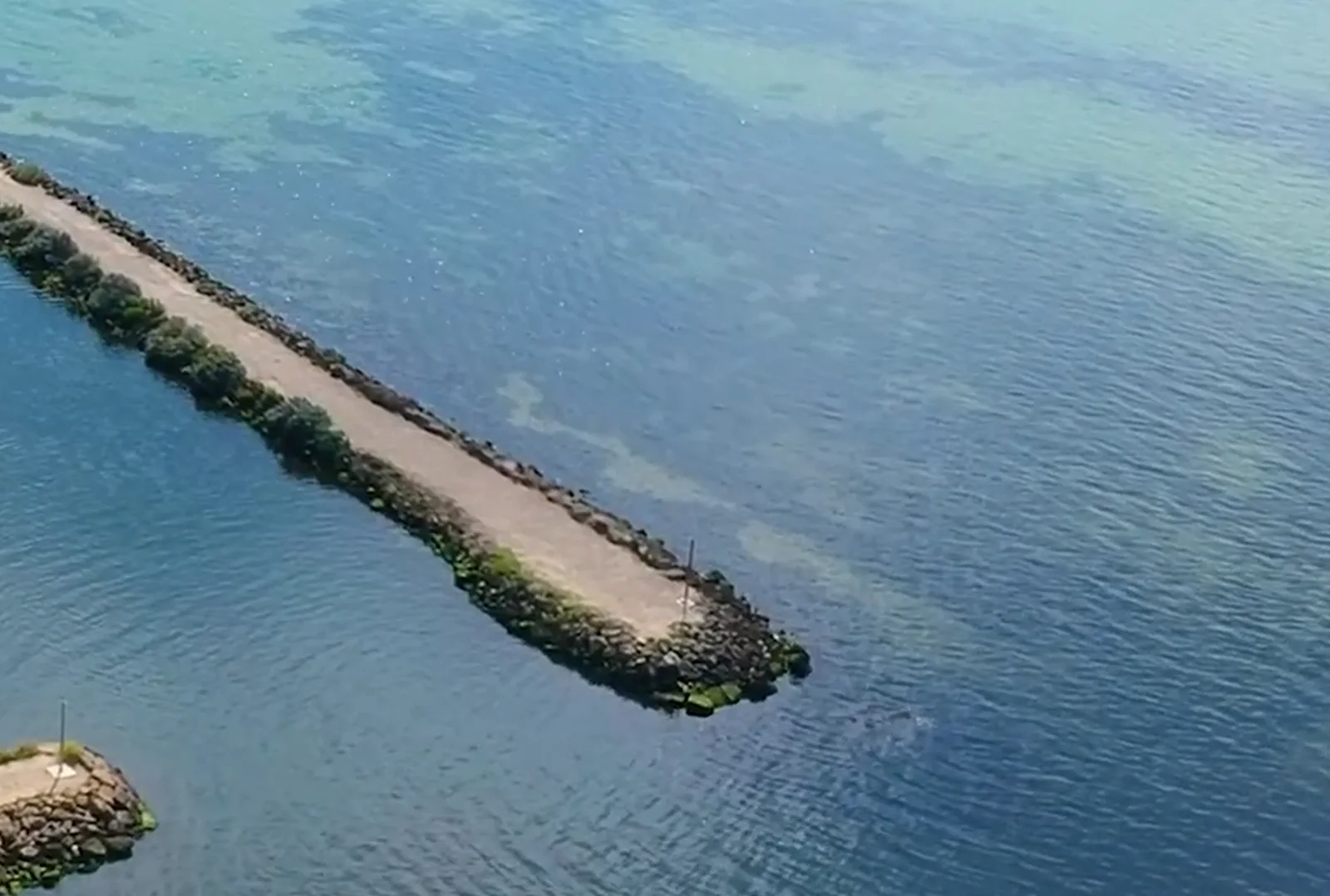
Do not treat this as a casual place to wander around in the dark. The rocks can be wet, the edge can be awkward, and landing squid at night is harder. Carry a head-torch, keep back from slippery edges, fish with another person if possible and do not climb down for a squid. A larger squid is not worth a fall.
How To Work The Weed Edge
Cast past the dark patch, not right on top of your feet. Let the jig sink on a semi-tight line for a short count, then work it back with small lifts and long pauses.
In shallow water, you do not need violent rod work. A better retrieve is controlled and patient:
- Cast beyond the weed edge.
- Let the jig settle above the weed, not into it.
- Use two or three small lifts to make it show.
- Pause longer than feels comfortable.
- Retrieve across the weed edge into a sand lane.
- Watch the line for a stop, sideways tick or extra weight.
Most missed squid happen because the angler keeps working the jig after the squid has already touched it. When the line stops or loads up, lift into weight. For technique details, use How to Work a Squid Jig and When to Strike.
Colours For Clifton Springs
When you can see the shallow weed clearly, start natural: olive, brown, prawn, baitfish and clear natural patterns. These suit clean shallow water where squid have time to inspect the jig.
When light drops, carry one glow, one UV or one pink/orange contrast jig. If wind has added a little stain, stronger contrast can help. If the water is bright and calm, go subtle before going loud. See the full Squid Jig Colours Australia guide for the colour system.
Gear Setup
A light Egi Rods Australia setup, 2500 reel, PE 0.6-0.8 braid and fluorocarbon leader are enough. The more important part is carrying the right sink-rate spread:
- one 3.5 slow-sinking jig for winter, wind and reach
- one 3.0 natural or prawn pattern for spring and autumn
- one 2.5 natural or glow option for summer shallows
- a landing net or squid gaffs Australia for safe landing from structure
Browse squid jigs Australia if you are building a Clifton Springs box.
Access And Etiquette
There is foreshore parking, a boat ramp and walkable harbour structure. Give boats room around the ramp and harbour entrance, especially when you are focused on a casting angle. Watch your footing on wet structure, use a head-torch at night and take ink, weed and rubbish home with you.
Check current rules in the Squid Fishing Regulations guide before keeping a feed.
Nearby Spots
- Portarlington Pier - a nearby Bellarine pier option with different casting angles.
- St Leonards Pier - useful when you want a more open Bellarine pier session.
- Geelong Squid Fishing - broader Corio Bay planning when you want several shore options.
- Indented Head Squid Fishing - another shallow Bellarine option where clear water and weed edges matter.
- Port Phillip Bay Squid Fishing - wider bay planning.
- Melbourne Squid Fishing - metro and bay-wide location logic.
FAQ
Is Clifton Springs good for squid fishing?
Yes. Clifton Springs has shallow weed beds, sand lanes, pier structure and a boat ramp break wall. It fishes best when you target darker weed patches and weed edges instead of empty pale sand.
What is the best wind for Clifton Springs?
The best wind is the wind that helps you cast into the dark weedy area and keep contact with the jig. Do not use a fixed compass rule only. Stand where the wind helps your cast and line angle work across the weed.
When should I fish the boat ramp break wall?
A safe high tide at night is the main window to watch. The extra water lets squid move over the shallow weed, and darkness can bring larger squid closer to the rock edge. Keep safety first because the rocks can be slippery and landing squid in the dark is harder.
What size squid jig should I use at Clifton Springs?
Use a 3.5 slow-sinking jig in winter, a 3.0 in spring and autumn, and a 2.5 in summer when the water is shallow, clear or pressured.
Why use a 3.5 slow-sinking jig in shallow water?
A 3.5 slow-sinking jig casts further and shows a stronger profile, but the slow sink keeps it above the weed longer. That is different from a fast-sinking 3.5, which can dig into the shallow weed too quickly.